

Rosehip oil is a cold-pressed seed oil that carries close to half its weight in linoleic acid, and that single number explains most of the rosehip oil benefits people actually notice: skin that stays soft past noon instead of going tight by ten. It is not pressed from petals. The oil comes from the seeds inside the hip, the small red fruit a rose leaves behind once the bloom has dropped, and it is cold-pressed from the seeds of Rosa canina, the wild dog rose native to Northern Europe. The flower is the part everyone photographs. The useful part is the seed, and you only get to it after the flower is finished.
Which means the ingredient sitting in a small amber bottle on a Brooklyn shelf is, in a sense, the rose's second act. Three drops, warmed between the palms, pressed into a face at the end of a long Tuesday. It sinks in faster than the word "oil" leads anyone to expect. Here is what the research says is happening while it does.
What Is Rosehip Oil? A Definition
Rosehip oil, also called rosehip seed oil, is a lightweight botanical oil cold-pressed from the seeds of the Rosa canina fruit, prized in skincare for a fatty acid profile dominated by polyunsaturated fats rather than the heavier occlusive fats found in most face oils. The oil content of rosehip seeds ranges from 5 to 18 percent, and the oil is composed of unsaturated fatty acids including linoleic acid at 36 to 55 percent, linolenic acid at 17 to 27 percent, and oleic acid at 15 to 22 percent. One widely cited characterization of Rosa canina seed oil put linoleic acid at 54.05 percent, linolenic acid at 19.37 percent, and phytosterols dominated by beta-sitosterol at 82.1 percent. In a 2020 study of organic rosehip seeds, polyunsaturated fatty acids made up 73.88 to 79.52 percent of the total profile, ahead of monounsaturated fats at 14.67 to 18.89 percent and saturated fats at just 5.22 to 7.36 percent.
That is an unusual ratio for a plant oil, and it is the whole reason rosehip behaves the way it does on skin. Very little of it is the waxy, heavy fraction that sits on the surface. Most of it is the thin, restless fraction the skin barrier is built from.
Rosehip Oil Benefits for Skin, According to the Research
Barrier support and non-greasy hydration
Linoleic acid is one of two fatty acids human skin cannot manufacture on its own, which is why an oil that is roughly half linoleic acid reads differently to the skin than one that is mostly oleic. Rosehip's real value is its fatty-acid profile, roughly half linoleic acid, which suits barrier repair and non-comedogenic hydration for acne-prone skin. Its high levels of polyunsaturated fatty acids and phytosterols make it suited to most skin types, including oily and acne-prone. The practical translation: it is one of the few face oils that people with congested skin tend to get along with.

|
$72 |

|
$46 |

|
$36 |

|
$120 |
Wrinkles, moisture and elasticity: what the trials measured
Rosehip is one of the few botanical oils with clinical numbers attached rather than folklore. In 2015, a double-blind trial published in Clinical Interventions in Aging followed 34 participants with crow's feet, aged 35 to 65, and after 8 weeks the rosehip group showed statistically significant improvements in crow's-feet wrinkles, skin moisture and elasticity. The honest caveat matters: that study used a standardized rose hip powder rather than the oil specifically, though the active fractions overlap substantially with rosehip seed oil's composition.
Topical evidence arrived more recently. A 2025 pilot study tracked 27 participants applying rosehip oil topically every day for five weeks, and using the VISIA imaging system, the same clinical-grade skin analysis dermatologists use, researchers measured a significant reduction in mean wrinkle scores along with visible declines in UV-related spots. The study's own authors noted that skin responses varied by individual, and that a small five-week pilot is not the same as a large, long-term trial.
The collagen mechanism
Two things appear to be happening at once. Trans-retinoic acid, a naturally occurring form of vitamin A, activates fibroblasts, the cells responsible for producing collagen and elastin, while rosehip oil also inhibits MMP-1, the matrix metalloproteinase enzyme that breaks down existing collagen. A 2024 review of rosehip's dermatological mechanisms notes that trans-retinoic acid and ascorbic acid appear to help block MMP-1, an enzyme that breaks down collagen in skin tissue.
Tone, marks and antioxidant load
A 2024 review in Frontiers in Pharmacology catalogued the dermatological applications of rosehip-based products across multiple Rosa species, confirming Rosa canina as the most extensively studied and highlighting its use for scarring, hyperpigmentation, wrinkles and atopic dermatitis, with vitamin C content and fatty acid composition identified as the primary active mechanisms. The antioxidant side is measurable too: rosehip seed has been found to contain phenolic compounds, carotenoids and ascorbic acid, and in laboratory comparison rosehip seed oil showed a higher antioxidant capacity than corn, olive and sunflower oils.
Is Rosehip Oil Really "Nature's Retinol"?
Short answer: no, and the overclaim does the ingredient a disservice. Rosehip oil does contain small amounts of all-trans retinoic acid, the active metabolite of vitamin A that retinol must convert to before it can affect skin cells, but the concentrations are trace-level, orders of magnitude below what clinical retinol or tretinoin formulations deliver. The extraction method changes the number: rosehip oil obtained by cold pressing and supercritical extraction contained the highest levels of retinoic acid, with all-trans-retinoic acid found above 0.3 percent in cold-pressed oil of R. rubiginosa in a 2019 analysis.
So rosehip is not a retinoid substitute. It is a barrier oil with a retinoid trace, and its real strengths are hydration and barrier support rather than retinoid-style renewal. If you want retinoid-level results, use a retinoid. Use rosehip for the thing it is genuinely excellent at, which is making skin comfortable enough to tolerate everything else you do to it.
Why Freshness Decides Whether Rosehip Oil Works at All
Here is the part most ingredient articles skip. That beautiful polyunsaturated profile is chemically fragile. Rosehip oil is vulnerable to lipid oxidation, precisely because of its high percentage of PUFA, and it oxidizes fast, which means packaging, extraction method and freshness matter more than the marketing. The tretinoin in rose hips is just as sensitive as the tretinoin in pharmaceuticals.
A drum of rosehip oil sitting in a warehouse for eighteen months is not the same material as rosehip oil pressed, blended and bottled in small runs. This is not an abstract argument for us. Marianella has made everything in small batches by hand in Brooklyn since 2007, which began as a practical answer to a family's move from Caracas and became the reason the oils in our bottles behave like oils rather than like old salad dressing. Small batches, clean ingredients, no shortcuts. With an ingredient this unstable, batch size is not a romantic detail. It is the active decision.
How to Use Rosehip Oil
At night, on skin still slightly damp, after any water-based serum and before or instead of a cream. Three to four drops nightly matches what the research actually tested; using more does not speed up collagen-related processes. Then be patient: plan on five to eight weeks of consistent daily use before judging results, the window both clinical studies used, which lines up with how long skin takes to turn over and show visible change. Using rosehip oil for a week and expecting smoother crow's feet is not a fair test of the ingredient; using it nightly for two months is.
Best Rosehip Oil Products in 2026: Four Ways to Meet the Ingredient
Our rosehip lives in four places across the line, at four different strengths of commitment, and they run inside the $40 to $160 range that covers all 82 of our Face, Body, Hand, Home and Fragrance products.
Rosehip Face Oil, $46
The plainest introduction. Straight rosehip, three drops, nothing between the seed and the skin. Start here if you have never used the ingredient and want to know what it does on your face rather than on someone else's. Rosehip Face Oil.
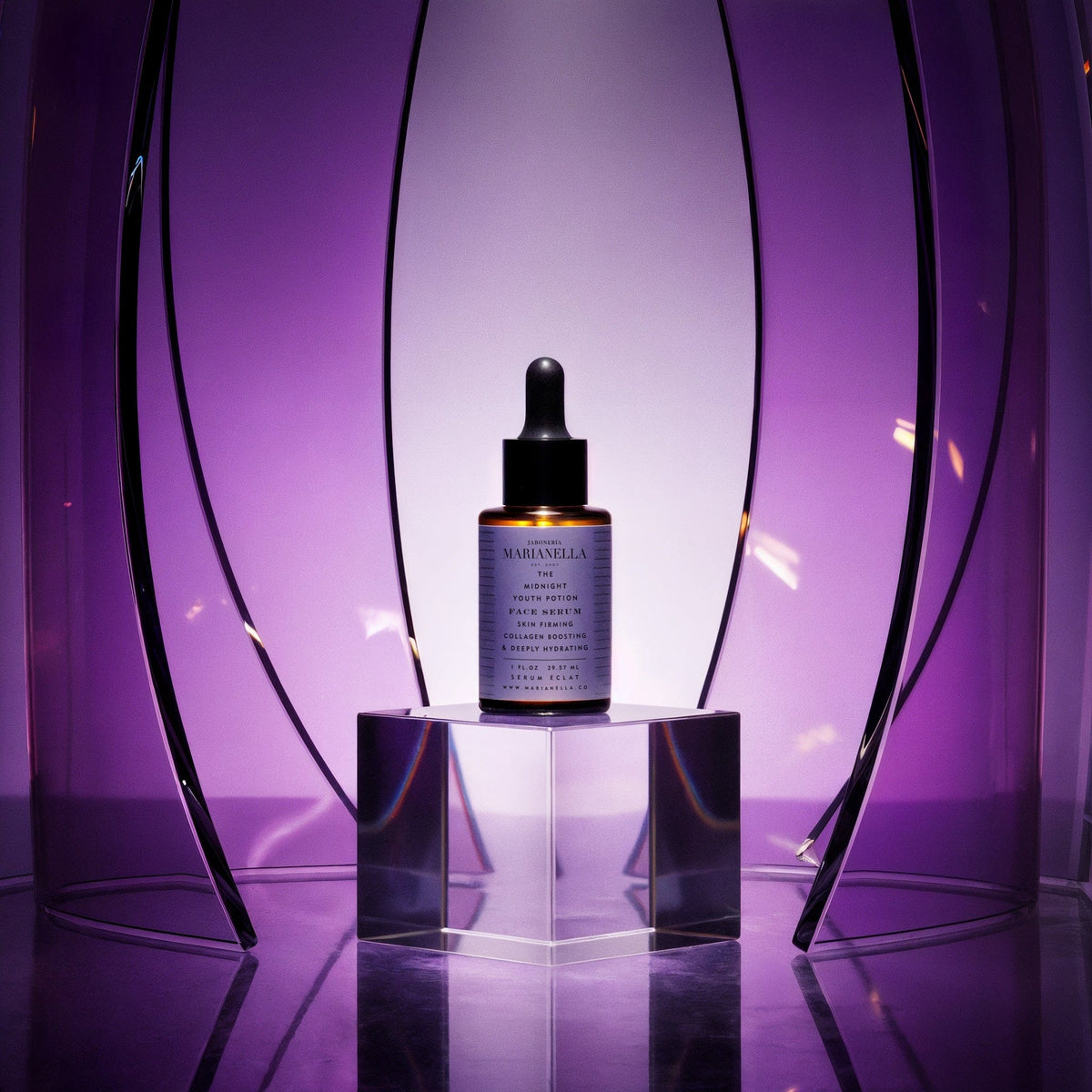
The Midnight Youth Potion, $72
Rosehip built into a night treatment, for the people who would rather apply one thing at 11pm than three. The Midnight Youth Potion.
Wrinkle Reducing Ultra Peptide Intensive Face Serum, $120
Rosehip alongside peptides, our most concentrated treatment step and the one to reach for if fine lines are the specific thing you are working on. Wrinkle Reducing Ultra Peptide Intensive Face Serum.
Rose Face Wash Cream, $36
Rosehip in the step most people treat as disposable. A cleanser that leaves the barrier intact is the difference between an oil that has work to do and an oil that gets to build on something. Rose Face Wash Cream.
If you want to start with the ingredient in its most direct form, the Rosehip Face Oil at $46 is the one we would hand you first, made in small batches in Brooklyn and also stocked at Bloomingdale's BEAUTYSPACE.
FAQ
What does rosehip oil do for your skin?
It works mainly through its fatty acids. Rosehip seed oil is 36 to 55 percent linoleic acid, which supports the skin barrier and holds moisture without heaviness. A 2024 Frontiers in Pharmacology review highlighted Rosa canina for scarring, hyperpigmentation, wrinkles and atopic dermatitis, naming vitamin C content and fatty acid composition as the primary mechanisms.
Is rosehip oil good for acne-prone skin?
Often, yes, which surprises people who avoid all facial oils. It can work because it is high in linoleic acid and generally low on the comedogenic scale, and its polyunsaturated fatty acid and phytosterol content makes it suited to most skin types including oily and acne-prone. Patch test along the jaw for a week before applying it across the whole face.
Can you use rosehip oil with retinol or vitamin C?
Yes. Apply water-based products first and the oil last, since oil slows the absorption of anything layered on top of it. Rosehip is not a retinoid replacement: its retinoic acid concentrations are trace-level, orders of magnitude below clinical retinol or tretinoin formulations. Treat it as the comfort layer that makes stronger actives easier to tolerate.
How long does rosehip oil take to work?
Barrier comfort shows up within days. Visible change takes longer. Both clinical studies measured at five to eight weeks of consistent daily use, which matches how long skin takes to turn over. The 2025 topical pilot ran five weeks with 27 participants. Give any rosehip oil two full months before deciding.
Does rosehip oil go bad?
Faster than most oils, and this is the thing worth knowing before you buy a large bottle. Rosehip oil is vulnerable to lipid oxidation because of its high polyunsaturated fatty acid content. Packaging, extraction method and freshness matter more than the marketing. Keep it capped, out of sunlight, and buy small, recently made batches rather than bulk.


Hinterlasse einen Kommentar
Diese Website ist durch hCaptcha geschützt und es gelten die allgemeinen Geschäftsbedingungen und Datenschutzbestimmungen von hCaptcha.