

There is a moment, usually somewhere around the fourth hand wash of the day, when your hands stop feeling like yours. The skin pulls tight across the knuckles. You flex them and something resists, a half second of stiffness that was not there in June.
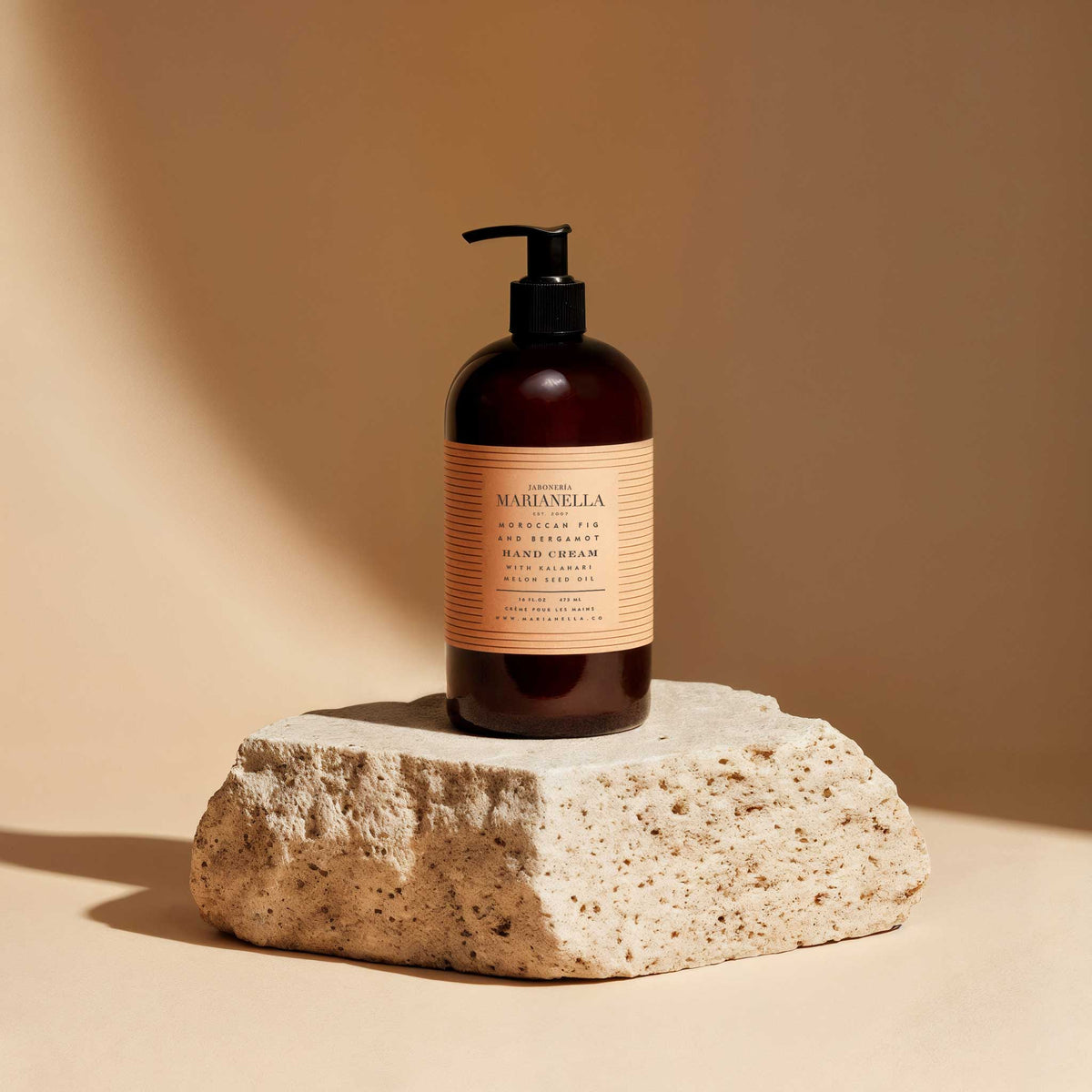
The Hydrating Hand Cream with Kalahari Oil is a rich, fast-absorbing hand cream built for exactly that moment: Kalahari melon seed oil and aloe vera for long-lasting hydration, glycerin to lock it in, and a finish dry enough that you can pick up a pen immediately after. Below is how to use it, how much, how often, and what to use it alongside through the rest of 2026.
What Is the Hydrating Hand Cream with Kalahari Oil?
It is a 16 fl. oz. hand cream, $68, made for dry and overworked hands. Kalahari melon seed oil, aloe vera, and a blend of coconut, sunflower, jojoba, avocado, argan, borage, and rosemary oils soften the skin and restore moisture balance. Glycerin helps hold that hydration in place, and vitamin E adds antioxidant protection for a visibly smoother, more youthful look. The formula absorbs fast and leaves hands comfortable rather than coated.
How to Use Hydrating Hand Cream with Kalahari Oil
Step one: dispense about an almond's worth. For both hands, that is enough. The cream is rich, and more than that simply sits on the surface waiting for you to do something with it.

Step two: warm it between your palms for three or four seconds. Do not rub it in yet. Press your palms flat together and let your own body heat loosen it. A warmed cream spreads in one pass instead of three.
Step three: backs of the hands first. Lay your right palm flat over the back of your left hand and sweep from the knuckles to the wrist, three times. This is the skin that takes the weather, the sun, and every wash, so it gets the cream while there is the most of it. The vitamin E goes where the exposure is.
Step four: interlace your fingers and slide. Fingers laced, pull your hands apart slowly so the cream draws down the length of each finger and into the webbing. Repeat twice. Most people skip the sides of their fingers entirely and then wonder why the dryness keeps returning there.
Step five: cuticles, one at a time. Use the pad of your thumb and press small circles at the base of each nail. Ten seconds per hand. Jojoba, avocado, and argan oils are doing the softening here.
Step six: finish at the wrists. Ring your wrist with your opposite hand and twist gently, the way you would wring out a cloth, once in each direction. Stop when the cream is gone from the surface.
The whole sequence runs 20 to 30 seconds. Because the formula is fast-absorbing, you are back to your keyboard, your paperwork, or your phone screen well inside a minute with nothing left behind on any of them.
When to Use It
After every wash. This is the single highest-value habit. Washing takes moisture out; glycerin is in this formula to lock moisture in. Pairing the two turns a daily subtraction into a daily addition.
Morning, before the day starts. A full application at 7am means your hands begin the day with a reserve rather than spending the whole day catching up.
After anything physical. Dishes, gardening, cleaning, a long drive with your hands on a cold wheel. Anything that leaves your hands overworked is the cue.
Last thing at night. Night is when a rich cream has the longest uninterrupted run at your skin. No handwashing for seven hours. Apply generously and let the botanical oils do their work while you sleep.
Seasonally, now through spring. Autumn 2026 is when indoor heating starts pulling humidity out of every room you sit in. From late September onward, most people need two or three more applications a day than they did in August. The 16 fl. oz. size exists for exactly this: a bottle that lives beside the kitchen sink and does not run out in November.
What to Pair It With
[Marianella hand soap or hand wash, product name], used immediately before. This is the natural sequence: cleanse, then restore, in the same 90 seconds at the same sink. Keeping the two side by side is what makes the habit stick, because the cream is already in your eyeline when your hands are still damp.
[Marianella body oil, product name], at night. Oil first on the arms and wrists, then the hand cream over the top as the sealing layer. [Confirm shared botanical oils between the two formulas from the Product Bible before publishing this line.]
[Marianella body cream or butter, product name], for full coverage. The hand cream handles the skin that gets washed a dozen times a day; the body cream handles everything that does not. Same finish, same family of nourishing botanical oils, one continuous routine from shoulder to fingertip.
Pro Tips
Apply to faintly damp hands. Glycerin is in this formula to lock hydration in, so give it something to lock in. Shake the water off, leave your hands just barely damp rather than bone dry, and apply. Same amount of cream, noticeably more comfort by the afternoon.
Trust the fast absorption and reapply more than you think. Most people underuse hand cream because they associate it with a slick film and a ruined page. This one absorbs quickly and leaves hands smooth rather than slippery, which means you can go again at 11am, at 3pm, and after dinner without rearranging your day around it.
Take it past the wrist. The skin on the inside of the wrist and the lower forearm is thin, exposed, and almost always forgotten. When you finish the wrist twist, keep going another two inches up. Aloe vera and vitamin E are as useful there as they are on your knuckles.
If your hands have started to feel tight this month, the Hydrating Hand Cream with Kalahari Oil is $68 for 16 fl. oz., sized to sit by the sink and last the season.
FAQ
How often should you use Hydrating Hand Cream with Kalahari Oil?
After every hand wash, plus once in the morning and once before bed. For most people that lands between four and eight applications a day in autumn and winter. Hands that are already dry or overworked benefit from more frequent use, since each wash removes moisture the cream and its glycerin then restore.
Does this hand cream leave hands greasy?
No. The formula is fast-absorbing and finishes smooth rather than slick, which is why it works mid-workday rather than only at bedtime. Use about an almond-sized amount for both hands, massage for 20 to 30 seconds, and you can handle paper, a keyboard, or a phone screen within a minute.
What does Kalahari melon seed oil do in a hand cream?
Kalahari melon seed oil is the lead oil in this formula, delivering long-lasting hydration and soothing comfort to dry, overworked hands. It works alongside aloe vera and a blend of coconut, sunflower, jojoba, avocado, argan, borage, and rosemary oils that soften the skin and restore its moisture balance.
Can you use it on cuticles and nails?
Yes. Press the pad of your thumb in small circles at the base of each nail for about ten seconds per hand after you have covered the backs and fingers. The jojoba, avocado, and argan oils in the blend soften the skin there, and the cuticles are usually the driest part of the hand.
Why the 16 fl. oz. size?
Because hand cream only works if it is within reach. At 16 fl. oz. for $68, this bottle is built to live permanently beside a kitchen or bathroom sink and survive a full heating season of daily use, rather than being rationed out of a small tube that runs empty by December.

Hinterlasse einen Kommentar
Diese Website ist durch hCaptcha geschützt und es gelten die allgemeinen Geschäftsbedingungen und Datenschutzbestimmungen von hCaptcha.