

Vitamin C skincare benefits are among the most clinically validated in modern dermatology. Whether the goal is brighter skin tone, fewer fine lines, or protection from daily environmental damage, L-ascorbic acid, the bioactive form of vitamin C, delivers measurable results with a depth of scientific support that few other topical ingredients can match. In 2026, it remains the benchmark brightening and anti-aging active, and the research keeps compounding. Marianella, handcrafted in Brooklyn since 2007, builds it into several core formulations informed by 18 years of small-batch expertise and three generations of Venezuelan botanical knowledge.
What Is Vitamin C in Skincare?
Vitamin C, or L-ascorbic acid, is a water-soluble antioxidant that the human body cannot synthesize on its own. In skincare, it functions as an antioxidant, a cofactor in collagen synthesis, and a tyrosinase inhibitor. Its biochemical function is mostly related to its redox activity. Vitamin C has the characteristic of being easily oxidized by releasing electrons in an aqueous solution, allowing it to act as a water-soluble antioxidant that removes reactive oxygen species and free radicals. Applied topically, it intercepts oxidative damage before it accumulates in skin tissue, which is what makes it relevant for everything from dark spots to accelerated skin aging.
Clinical studies underscore the effectiveness of topical L-ascorbic acid in preventing photoaging, reducing wrinkles, and mitigating hyperpigmentation. Those three concerns, photoaging, wrinkles, and uneven tone, cover the majority of what people are actually looking to address with a serum. That's why vitamin C for skin has retained its position at the top of evidence-based ingredient lists for decades, and why its formulation remains a priority at Marianella.
How Vitamin C Works: The Science
Collagen Synthesis at the Cellular Level
The collagen connection is not marketing language. It's well-documented cellular biology. After prolonged exposure to ascorbate, collagen synthesis in cultured human skin fibroblasts increased approximately 8-fold with no significant change in synthesis of noncollagen protein. That specificity matters: the effect targets collagen, not overall protein production indiscriminately.

|
$43 |

|
$72 |

|
$43 |

|
$28 |
Ascorbic acid specifically stimulates collagen production in cultured human skin fibroblasts, an effect that appears to be independent of its cofactor role in prolyl and lysyl hydroxylation. This means vitamin C is driving collagen gene expression through a separate mechanism, not just acting as a structural helper in the synthesis process. The main cutaneous collagens are types I and III, which are less synthesized with aging. Both are involved in skin firmness and structural density. The reduction of both is what makes skin look and feel thinner over time.
Gene-Level Activity: 2025 Research
A 2025 study published in the Journal of Investigative Dermatology moved the conversation further. Researchers in Japan discovered that vitamin C helps thicken the skin by directly activating genes that control skin cell growth and development. Their findings suggest that vitamin C may restore skin function by reactivating genes essential for epidermal renewal. This is not a surface-level brightening mechanism. It's a structural one, operating at the level of gene expression in the epidermis itself.
Separately, scientists at the University of Otago identified a direct connection between how much vitamin C people consume and how well their skin produces collagen and renews itself. Boosting vitamin C intake sends the vitamin straight into the skin, where it strengthens collagen and accelerates renewal. Internal and topical pathways, used together, create a compounding effect.
Tyrosinase Inhibition and Hyperpigmentation
A vitamin C serum works on hyperpigmentation by inhibiting tyrosinase, the enzyme responsible for excess melanin production. L-ascorbic acid directly inhibits tyrosinase by interacting with copper ions at the enzyme's active site. This reduces melanin synthesis at its source, gradually lightening existing pigmentation and preventing new spots from forming.
Concentration determines outcome. Clinical studies show that L-ascorbic acid concentrations between 10% and 20% are most effective for reducing hyperpigmentation. Visible improvement typically takes 8 to 12 weeks of consistent use. That timeline is consistent across peer-reviewed research and aligns with what responsible formulators communicate to consumers.
Antioxidant Defense Against UV Damage
Vitamin C's mechanisms underlie its protective effects against environmental stressors, particularly UV radiation–induced damage. It does not function as a sunscreen and does not replace SPF. It works alongside sunscreen as a secondary biological defense, catching the oxidative damage that sunscreen alone cannot fully block. It neutralizes UV-induced free radicals and reactive oxygen species that would otherwise activate melanocyte signaling pathways. Morning application, layered under SPF, is the standard protocol.
The Formulation Challenge
The science behind vitamin C in skincare is compelling. The formulation science is what makes or breaks it. Formulation strategies, including pH adjustment and encapsulation, are explored to address the intrinsic instability of L-ascorbic acid. L-ascorbic acid requires a pH of 3.0 to 3.5 to penetrate the skin effectively. Above pH 4.0, absorption drops dramatically.
Oxidized L-ascorbic acid turns from clear or pale straw to yellow, then amber, then brown. Any serum that has shifted to a dark yellow or orange hue has undergone significant oxidation and should be discarded. Packaging, pH, and preservative systems all determine how long a vitamin C formulation stays active after it leaves the lab. This is where small-batch manufacturing, the model Marianella has operated on since 2007, has a real advantage. Smaller production runs mean fresher product reaches the consumer.
Vitamin C and Niacinamide: Why the Combination Works
One of the most discussed pairings in contemporary formulation science is vitamin C alongside niacinamide. You can safely combine niacinamide and vitamin C in a skincare routine. Historical concerns about incompatibility stemmed from 1960s laboratory studies showing potential issues when these ingredients were heated together at extremely acidic pH levels. However, modern skincare formulations utilize pH-balanced, temperature-controlled manufacturing processes that eliminate these theoretical interactions.
Vitamin C brightens and shields against oxidative stress, while niacinamide calms visible redness and strengthens barrier function, creating balanced results for skin experiencing dryness, dullness, or hormonal changes. One key advantage of using niacinamide alongside vitamin C is its ability to stabilize the latter. Vitamin C is notorious for its instability, as it easily oxidizes when exposed to air or light. When niacinamide is introduced, it helps to stabilize vitamin C, making it more effective and preventing oxidation. This means that the vitamin C in skincare products will remain potent and active for longer.
Marianella's Vitamin C Collagen Boosting Face Serum with Niacinamide is built around exactly this pairing. The result is a serum designed to address brightness and tone simultaneously, without compromising barrier integrity. $43.
Vitamin C and Peptides: The Anti-Aging Stack
Vitamin C and peptides operate through complementary mechanisms. Vitamin C drives collagen synthesis at the gene expression level. Peptides signal the skin to produce more structural proteins by acting as targeted messengers. When used together, vitamin C and niacinamide, and by extension other actives like peptides, are especially effective at fighting visible signs of aging.
Marianella's Wrinkle Reducing Ultra Peptide Intensive Face Serum approaches fine lines and loss of density through this multi-pathway logic: combining peptide activity with the antioxidant and collagen-supportive properties of a precision serum formulation. $72.
Marianella Vitamin C Products: What to Know
Vitamin C Collagen Boosting Face Serum with Niacinamide
Formulated to address the two most common concerns in one step: uneven skin tone and early signs of structural aging. The vitamin C and niacinamide pairing, working through different pathways to tackle uneven skin tone, makes this a practical daily serum for most skin types. Handcrafted in Brooklyn, with the formulation discipline that 18 years of small-batch production builds into every SKU. Vitamin C Collagen Boosting Face Serum with Niacinamide. $43.
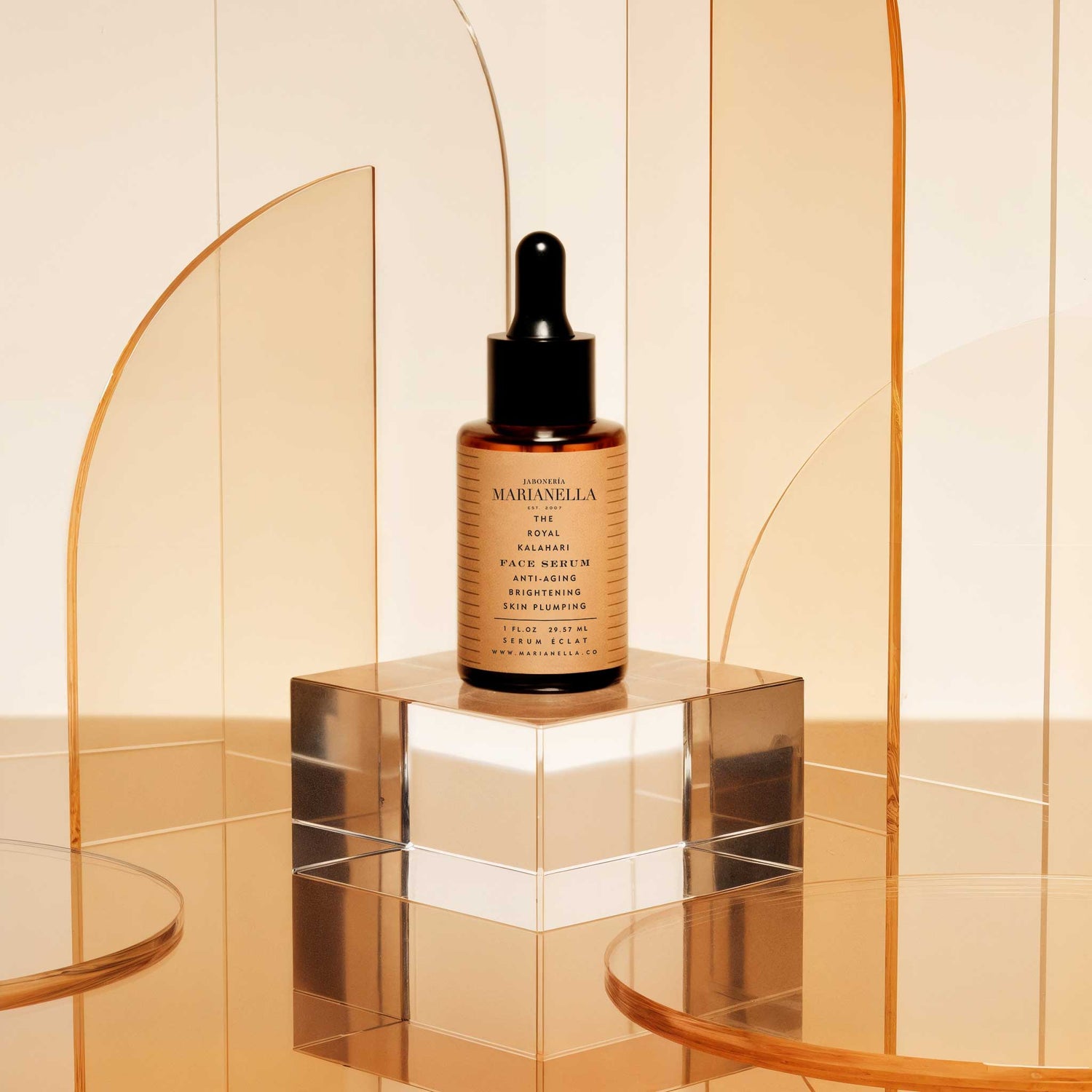
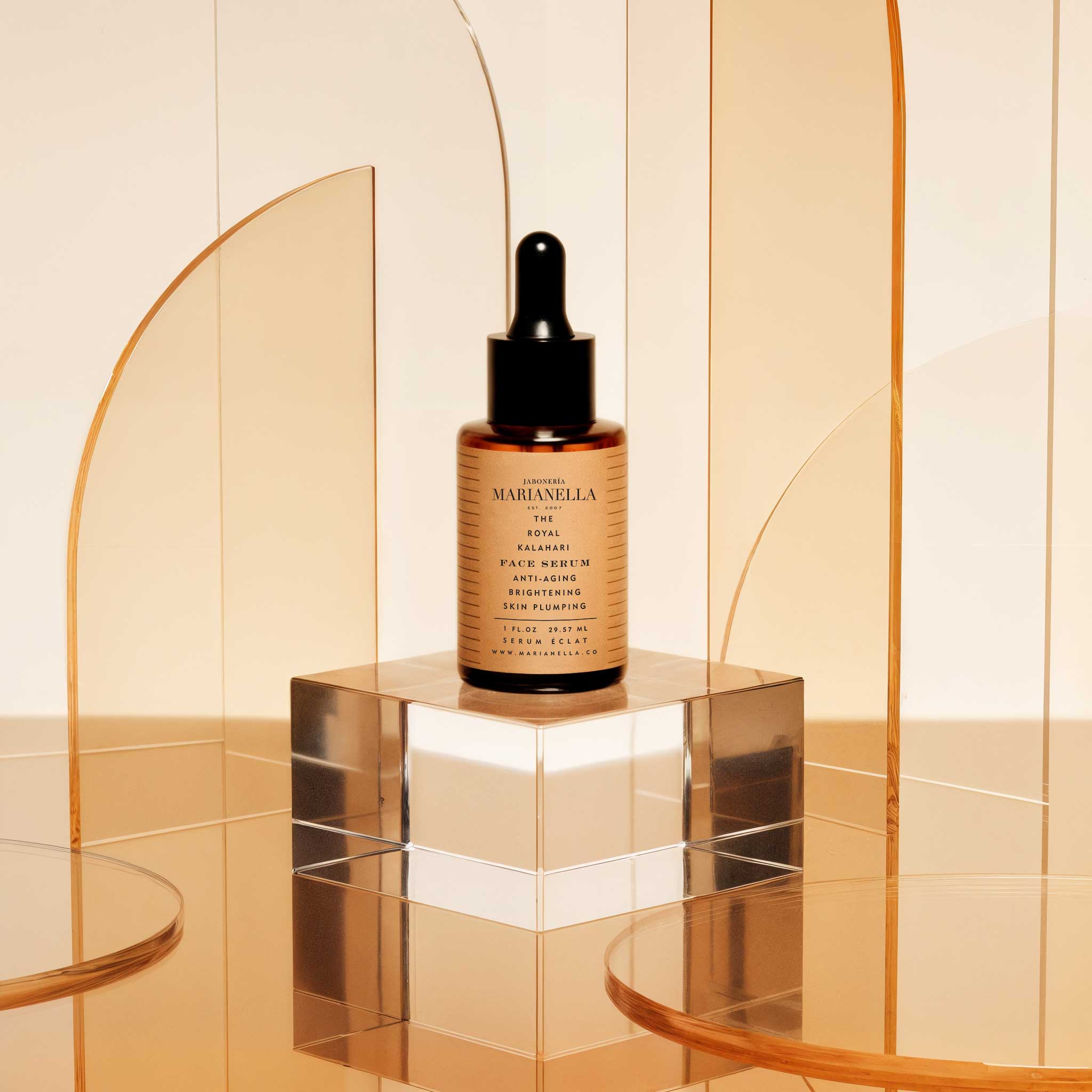
The Royal Kalahari Face Serum
Named for the Kalahari botanical complex at its core, this serum reflects the brand's Venezuelan heritage and three-generation knowledge of plant-based actives. The Royal Kalahari line has been one of Marianella's most recognized, featured across Vogue, Oprah, and People Magazine, where it contributed to the brand's Star Beauty Award recognition. The Royal Kalahari Face Serum. $43.
The Royal Kalahari Under Eye and Lip Serum Roller Oil
Ascorbic acid is widely used in topical compositions to reduce the appearance of fine lines, wrinkles, dyschromia, uneven pigmentation, and dark circles under the eyes. The delicate periorbital area is often where oxidative damage surfaces first. Marianella's roller-oil format delivers targeted treatment with a precise applicator designed to work with, not against, the thin skin beneath the eye. The Royal Kalahari Under Eye and Lip Serum Roller Oil. $28.
Wrinkle Reducing Ultra Peptide Intensive Face Serum
A higher-investment formulation for skin focused on structural aging. Peptide activity and antioxidant protection combine in a serum built for consistent, cumulative results over time. The kind of formulation that reflects what 18 years of iteration looks like in practice. Wrinkle Reducing Ultra Peptide Intensive Face Serum. $72.
How to Use Vitamin C for Skin: Practical Guidance
When to Apply
Morning is the evidence-backed window for vitamin C application. Vitamin C does not replace SPF. It works alongside sunscreen as a secondary biological defense, catching the oxidative damage that sunscreen alone cannot fully block. Apply the serum to clean skin, allow it to absorb, then follow with moisturizer and SPF. The antioxidant activity is most useful when it precedes UV exposure, not after.
Layering with Other Actives
Vitamin C pairs well with niacinamide, as discussed above. When layering, use a vitamin C serum first, followed by a niacinamide formula. Both actives thrive in similar pH ranges, and together they create one of skincare's most powerful brightening combinations. Avoid pairing with benzoyl peroxide in the same step, as the two can work against each other.
What to Expect
Results from vitamin C for skin are measurable but not overnight. The science supports a realistic arc: weeks two to four typically bring improved overall radiance and skin tone evenness as surface-level oxidative damage is addressed. Weeks four to six can bring early visible brightening of superficial pigmentation as tyrosinase inhibition slows active melanin production. Structural changes, the collagen and epidermal thickening documented in research, develop over a longer window with consistent daily use.
Why Formulation Origin Matters in 2026
The best vitamin C products in 2026 are not defined by marketing concentration claims alone. Stability, pH, delivery system, and ingredient pairing determine whether the active reaches the skin in working condition. Marianella's approach, small-batch production in Brooklyn, botanically informed by Venezuelan heritage, and grounded in 18 years of formulation refinement, applies that logic across 82 SKUs ranging from $12 to $160. The brand is now carried at Bloomingdale's BEAUTYSPACE, a placement that reflects both formulation credibility and editorial recognition across Vogue, Forbes, Allure, WWD, and Oprah.
The science behind vitamin C in skincare is robust. What it asks of a brand is the discipline to formulate honestly, stabilize correctly, and pair it with ingredients that compound rather than compromise its activity. That's the standard Marianella has held since 2007.
Explore the full Marianella vitamin C serum range and find the formulation that fits where your skin is right now.
```

Hinterlasse einen Kommentar
Diese Website ist durch hCaptcha geschützt und es gelten die allgemeinen Geschäftsbedingungen und Datenschutzbestimmungen von hCaptcha.