

Safflower oil is a cold pressed seed oil that carries one of the highest concentrations of linoleic acid in the plant world, which is why it shows up in body care built for skin that feels tight, thirsty and stripped. That is the short answer to the question behind most searches for safflower oil benefits: it works because skin cannot make linoleic acid on its own, and safflower hands it over in quantity. Analysis of safflower seed oils found linoleic acid accounting for 55.1 to 77.0 percent of the oil, with a mean value of 70.66 percent. In a body scrub, that translates to the thing you notice at the sink afterward: you reach for lotion out of habit, and then you do not need it.
What Is Safflower Oil?
Safflower oil is the fixed oil pressed from the seeds of Carthamus tinctorius, a thistle-like plant with orange-yellow flower heads that has been cultivated for dye and for oil across Persia, Egypt, India and the Mediterranean for thousands of years. The oil is extracted from the seeds and is known for an exceptionally high concentration of linoleic acid, approximately 70 to 80 percent. Oil content in the seed itself ranges from 23.08 to 36.51 percent, so it takes a great deal of seed to fill a bottle. In cosmetic ingredient lists it appears as Carthamus Tinctorius (Safflower) Seed Oil, usually near the top, because it is a carrier: the oil that holds everything else and delivers it.
What Is Actually In It
The fatty acid profile is unusually lopsided, and that is the point. Linoleic at around 78 percent, oleic at around 15 percent, palmitic at around 5 percent and stearic at around 2 percent make up 99 percent of all detected fatty acids. A 2024 GC-MS study of the seed oil identified seven fatty acids accounting for 100 percent of the total oil, with linoleic acid at 79.98 percent, followed by oleic at 11.20 percent and palmitic at 5.71 percent. Alongside the fatty acids sit the quiet components: alpha-tocopherol makes up over 94 percent of the tocochromanols present, and beta-sitosterol is the predominant phytosterol at over 36 percent. Vitamin E content is reported at roughly 44 mg per 100 g of alpha-tocopherol.
Safflower Oil Benefits for Skin
Most oils soften. This one participates. The distinction matters enough that it is worth separating the benefits into the ones you can feel within a minute and the ones that accumulate across a season.

It Rebuilds the Mortar Between Your Cells
Your outermost layer holds water because of a lipid matrix, and linoleic acid is structural to it. At 70 to 80 percent linoleic acid content, safflower oil provides a direct supply of the fatty acid that integrates into the ceramide-1 structure within the stratum corneum's intercellular lipid matrix. Ceramide-1 is a long-chain ceramide critical to the lamellar organization that keeps the barrier functional, and when linoleic acid levels decline with age, cleansing and environmental exposure, barrier integrity suffers. Moisturisers containing linoleic acid help replenish levels of ceramide 1 linoleate and maintain skin barrier function. This is the mechanism under the everyday complaint of winter skin: not a lack of cream, a lack of the specific lipid that keeps water on your side of the wall.
It Holds Water In
A 2026 study published in Cosmetics tested topical safflower seed oil on barrier damage caused by ablative fractional laser, a deliberately severe model. Laser therapy impairs epidermal barrier integrity by disrupting stratum corneum lipids and keratinocyte differentiation, raising transepidermal water loss, and the study set out to evaluate topical safflower seed oil for post-laser barrier restoration. The oil used was characterized at 69.1 percent linoleic acid and 18.7 percent oleic acid, and over seven days of laser exposure alone, transepidermal water loss rose four to six fold in mouse skin. The researchers traced part of the repair effect to the PPAR-gamma signaling pathway, which governs lipid synthesis in the epidermis. Translated out of the lab: safflower does not sit on top of dryness, it gives the skin the raw material to fix it.
It Is Light, and That Is Chemistry Rather Than Marketing
Heavy oils are usually oleic-dominant. Safflower is not. It contains a high level of linoleic acid at 70 percent and only a small percentage of oleic acid at 11 percent, which can make it a good choice for acne-prone skin. The high linoleic content makes it particularly suitable for blemish-prone and combination skin, keeping products light while leaving a smooth, soft surface. If you have avoided body oils because of the forty minutes spent sitting on the edge of the bed waiting to be dressable, this is the fatty acid profile that changed that.
It Calms, and It Slows the Enzymes That Loosen Skin
Phytosterols in the oil can inhibit the activity of NF-kappa-B and AP-1, two pro-inflammatory transcription factors that code for chemokines and cytokines. There is firmness data too: research demonstrates that safflower oil inhibits collagenase by 47 to 72.1 percent and elastase by 32.2 to 70.3 percent. Those are the enzymes that dismantle collagen and elastin, the two proteins responsible for skin springing back. The 2024 Scientific Reports work also measured antioxidant capacity, finding potent inhibitory effects on free radicals with an IC50 of 13.18 micrograms per millilitre.
High Linoleic Versus High Oleic Safflower Oil
Not all safflower is the same oil, and anyone shopping the best safflower oil products 2026 has to offer should know which version they are buying. Plant breeders have developed high-oleic cultivars for the fryer, where stability at heat matters more than fatty acid delivery. The spread across cultivars is enormous: in a study of 87 safflower accessions, linoleic acid varied from 37.7 percent in one genotype to 77.73 percent in another. For skin, high-linoleic is the one you want. It is the lighter oil, the faster one, and the one that supplies the fatty acid your barrier is short of.
How It Compares to Rosehip and Other Facial Oils
Both oils contain linoleic acid, but safflower runs at roughly 70 to 80 percent against rosehip's 44 to 50 percent; rosehip carries more oleic acid and more natural antioxidants, which suits dry or mature skin, while safflower is lighter. Neither is better in the abstract. They answer different questions. Safflower answers the one about skin that feels tight but cannot tolerate anything occlusive.
Where Safflower Oil Belongs in a Body Ritual
Here is the practical part that most ingredient articles skip. Oil applied to bone-dry skin has nothing to hold. Oil applied to skin still warm and damp from water has everything to hold, because the lipid traps the water that is already there rather than trying to import it. This is why safflower earns its keep in the shower rather than after it, suspended in something that exfoliates while it conditions, so the freshly uncovered surface meets the fatty acid in the same motion.
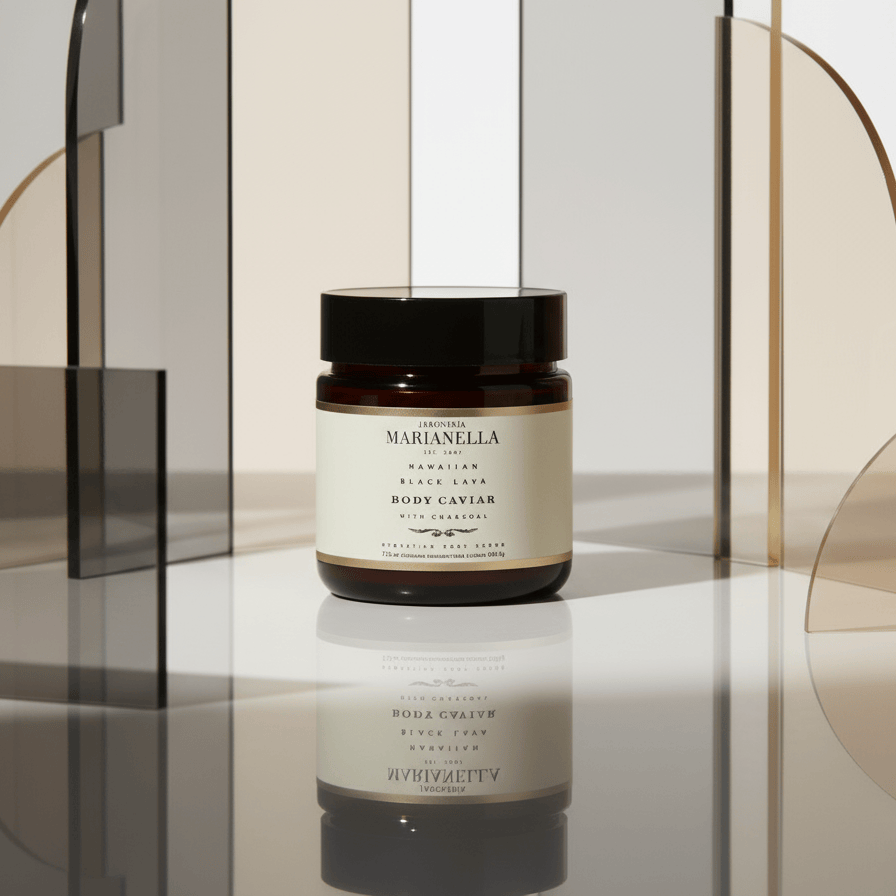
That is the logic behind our Hawaiian Black Lava Body Caviar Body Scrub with Charcoal, $48. Charcoal and black lava do the lifting. Safflower oil does the staying. You rinse, you press a towel against your arm, and the skin underneath is soft rather than squeaking.
Best Safflower Oil Products 2026: What to Look For
When you are comparing the best safflower oil products 2026 has on shelves, three things separate a formula that works from a formula that lists an ingredient. First, position on the ingredient list, because a trace of safflower behind five silicones is decoration. Second, batch size, since linoleic acid is polyunsaturated and oxidizes; oil that sat in a warehouse for two years is not the oil in the study. Third, honesty about what else is in the jar.
Marianella has made bath, body and skincare this way since 2007. We are the only Venezuelan-founded, independent luxury skincare and home fragrance brand in the United States, and the story runs from Caracas to Brooklyn: the simple joy of making something beautiful out of nature, carried across a border and rebuilt from scratch when life brought the family here. Small batches. Clean ingredients. No shortcuts. There are 82 products now across Face, Body, Hand, Home and Fragrance, between $40 and $160, sold at Bloomingdale's BEAUTYSPACE and written up in Vogue, Forbes, Allure, the New York Times, Harper's Bazaar and Oprah's Favorite Things. Everything is still handcrafted here.
If the last few weeks of weather have left your skin tight and flaking at the shins, start with the Hawaiian Black Lava Body Caviar Body Scrub with Charcoal, $48, and see what safflower oil does across one week of showers.
FAQ
What does safflower oil do for the skin barrier?
It supplies linoleic acid, which skin cannot synthesize itself. That fatty acid integrates into ceramide-1 in the stratum corneum's lipid matrix, and ceramide-1 is critical to the lamellar organization that keeps the barrier working; when linoleic levels fall with age and cleansing, barrier integrity suffers. Replenishing it topically helps skin hold its own water instead of losing it to the air.
Is safflower oil good for acne-prone or oily skin?
Generally yes, because of its fatty acid ratio. Safflower contains roughly 70 percent linoleic acid and only about 11 percent oleic acid, which can make it a good fit for acne-prone skin. Formulators favor it for blemish-prone and combination skin because it keeps a product light and breathable while leaving the surface smooth. Patch test first if your skin reacts easily.
What is the difference between high linoleic and high oleic safflower oil?
They come from different cultivars of the same plant. High oleic varieties were bred for cooking stability; high linoleic is the skincare grade. The variation is wide: across 87 safflower accessions, linoleic acid ranged from 37.7 percent to 77.73 percent. For barrier support and a fast-absorbing finish, choose formulas built on the high linoleic version.
Does safflower oil contain vitamin E?
Yes, and it is the most bioavailable form. Alpha-tocopherol accounts for over 94 percent of the tocochromanols in safflower seed oil, with content reported around 44 mg per 100 g. That tocopherol does double duty, working as an antioxidant on skin and helping protect the oil's own polyunsaturated fatty acids from going rancid in the jar.
Which Marianella product contains safflower oil?
The Hawaiian Black Lava Body Caviar Body Scrub with Charcoal, $48, available at marianella.co. Like everything we make, it is produced in small batches by hand in Brooklyn, part of a line of 82 products across Face, Body, Hand, Home and Fragrance priced between $40 and $160, also carried at Bloomingdale's BEAUTYSPACE.

Hinterlasse einen Kommentar
Diese Website ist durch hCaptcha geschützt und es gelten die allgemeinen Geschäftsbedingungen und Datenschutzbestimmungen von hCaptcha.