

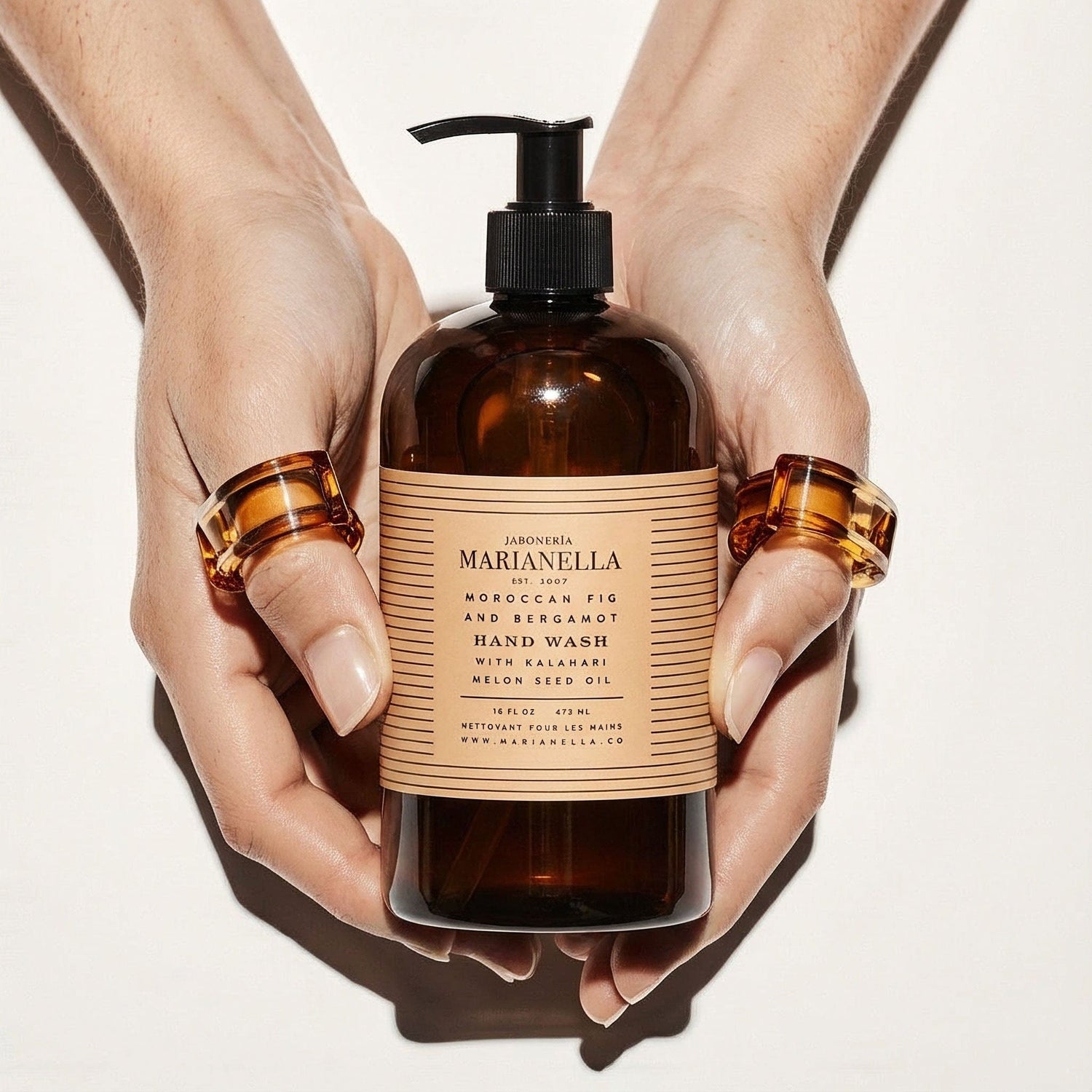
Borage seed oil skincare benefits have earned serious scientific attention, and for good reason. This cold-pressed botanical oil delivers the highest known concentration of gamma-linolenic acid (GLA) of any plant source, making it one of the most structurally meaningful ingredients a formulator can work with. For anyone dealing with a compromised skin barrier, chronic dryness, inflammatory conditions, or early signs of aging, borage seed oil belongs in the conversation.
At Marianella, where every formula is handcrafted in small batches in Brooklyn and draws on 18 years of botanical expertise, borage seed oil represents exactly the kind of high-efficacy, plant-sourced ingredient that anchors serious skincare. Not trend-driven. Evidence-driven.
What Is Borage Seed Oil?
Borage seed oil is derived from the seeds of the Borago officinalis plant, a rich emollient oil. This potent botanical is extracted from the seeds of the brilliant blue Borago officinalis flower, commonly known as the Starflower. It is nature's most concentrated source of gamma-linolenic acid (GLA), an essential omega-6 fatty acid critical for barrier function, cellular health, and inflammation control.
Its primary value lies in its high content of essential fatty acids, particularly GLA, which typically constitutes 20–26% of the oil. Borage seed oil supplies the highest concentration of GLA of any plant, nearly three times higher than evening primrose oil. That gap matters. More GLA per drop means more functional delivery to the skin with less product needed.
The quality and efficacy of borage oil depend entirely on its extraction method. The highest-grade oil is produced through cold-press extraction, a mechanical process that crushes the seeds at low temperatures, ensuring that the oil's fragile, heat-sensitive components, especially GLA, remain intact, unoxidized, and maximally potent.
The Science Behind Borage Seed Oil for Skin
GLA and the Skin Barrier: What the Research Shows
GLA is an omega-6 fatty acid that is crucial for maintaining the skin's natural barrier function and regulating inflammatory processes. The significance of this cannot be overstated. A compromised skin barrier is the root mechanism behind sensitivity, dehydration, reactive skin, and inflammatory flare-ups. Address the barrier, and many downstream concerns resolve themselves.
Human skin is not able to biosynthesize gamma-linolenic acid (GLA) from its precursor linoleic acid, or arachidonic acid from dihomo-gamma-linolenic acid (DHGLA). This is a critical biochemical fact. Supplementation with GLA-rich seed oil of borage bypasses the step of hepatic 6-desaturation of fatty acids and therefore compensates for the lack of these essential fatty acids in conditions with impaired activity of delta-6 desaturase. In practical terms, the skin cannot manufacture what it needs on its own, and topical delivery via borage seed oil fills that gap directly.
The effects of fatty acids derived from borage oil on skin barrier function were assessed by measurement of transepidermal water loss (TEWL). Borage oil consumption induced a statistically significant improvement of cutaneous barrier function, reflected in a mean decrease of 10.8% in transepidermal water loss. In the same study, 34% of participants reported itching before borage oil use, compared to 0% afterwards. Reported dry skin was reduced from 42% to 14%.
Topical application demonstrates comparable results. In a study of 37 patients with clinically diagnosed infantile seborrheic dermatitis, within 3–4 weeks of a daily regimen of topically applied borage oil containing 24% GLA, all patients were symptom free.
Anti-Inflammatory Properties
The body converts GLA to prostaglandin E1 (PGE1), a substance that acts like a hormone, helping reduce inflammation tied to skin conditions and cardiovascular concerns. For the skin, this prostaglandin pathway is central. Inflammatory triggers, including pollution, UV exposure, hormonal shifts, and diet, all disrupt barrier function and cellular integrity. GLA's conversion to PGE1 creates a systemic anti-inflammatory signal that begins at the lipid level.
A 2018 review of studies using borage oil topically and other GLA-containing plant oils found that borage oil has both antioxidant and anti-inflammatory effects that can be beneficial for people with atopic dermatitis. Clinical research shows more promise with topical borage oil for skin conditions compared with oral versions.
Borage seed oil is very high in gamma-linolenic acid, an essential omega-6 fatty acid that has an anti-inflammatory effect on the skin when used topically. A small study of children with eczema showed that daily application of borage seed oil to the skin reduced itching and redness and reduced TEWL.
Borage Seed Oil and Anti-Aging
The anti-aging case for borage seed oil is built on two mechanisms: barrier reinforcement and enzymatic inhibition.
Research from Michalak et al. (2022) found methanol extracts of borage to inhibit the activity of both collagenase and elastase, the enzymes responsible for breaking down collagen and elastin in the skin. This is not a cosmetic claim. It is a documented molecular action at the enzyme level, meaning borage compounds actively slow the degradation of the structural proteins that keep skin firm and resilient.
While borage oil does not directly contain collagen, the constant reduction of inflammation and the delivery of essential building blocks, including fatty acids, create an optimal cellular environment for the production and maintenance of collagen and elastin, the proteins responsible for skin firmness and bounce.
Borage seed oil's GLA content supports skin regeneration and helps improve elasticity, resulting in firmer, more youthful-looking skin over time. The omega-6 fatty acids found in borage seed oil help the skin maintain its structure by promoting collagen production and improving skin barrier function.
Elasticity is a key metric in anti-aging studies. Borage oil's ability to reduce TEWL and rebuild the barrier has a documented positive correlation with improved dermal viscoelastic properties over time.
Antioxidant Activity
Antioxidants derived mostly from borage oil's phenolic compounds have been shown in some cases to be more effective than synthetic antioxidants and can help protect the skin from free radical damage and environmental stressors, potentially slowing down the visible signs of aging and supporting overall skin health.
Borage oil contains anti-radical compounds like vitamin E, which stabilize and neutralize free radicals. It is antioxidant and helps fight against premature aging of the skin.
Who Should Use Borage Seed Oil for Skin?
Borage seed oil for skin is not a single-concern ingredient. Its profile addresses several distinct skin types and conditions simultaneously.
Dry and Dehydrated Skin
Over time, the skin's ability to retain moisture and produce collagen declines, leading to fine lines, wrinkles, and loss of firmness. The essential fatty acids in borage seed oil help replenish the lipids in the skin, improving elasticity and reducing the appearance of aging. For dry skin specifically, the lipid-replenishing action works at the structural level, not just as a surface moisturizer.
Sensitive and Reactive Skin
When skin is inflamed or irritated, it loses more water, creating a worsening cycle. Daily application of borage seed oil supports the skin's barrier function, reducing that moisture escape. For rosacea-prone and reactive complexions, gamma-linolenic acid is reportedly effective for treating TEWL and epidermal hyper-proliferation such as psoriasis.
Mature Skin
Supplementation should compensate for the lack of essential fatty acids in conditions with impaired activity of delta-6 desaturase, such as in normal aging. As the skin ages, delta-6 desaturase activity decreases, which means the skin's natural GLA production pathway becomes less efficient. Topical borage seed oil bypasses this decline entirely.
Acne-Prone Skin
Borage seed oil is a high source of linoleic acid and omega-3 fatty acids, which can help combat commonly recognized causes of acne, including keratinization within skin follicles, increased sebum production, and inflammation. It quickly absorbs into the skin without leaving a greasy residue, making it compatible with oilier skin types that typically avoid facial oils.
Borage Seed Oil vs. Evening Primrose Oil: A Direct Comparison
Evening primrose oil is the more familiar GLA-bearing oil in mainstream skincare. The comparison is worth stating plainly. As dietary sources of gamma-linolenic acid, borage oil contains 24–25 g/100 g GLA while evening primrose oil contains only 8–10 g/100 g GLA, yet both are efficacious in treating skin disorders. The concentration advantage of borage is significant, approximately two to three times the GLA density, meaning formulas using borage seed oil can achieve therapeutic-level efficacy at lower concentrations.
Borage Seed Oil in Luxury Skincare Formulation
Most botanical oils earn a place in skincare through gentle emolliency or fragrance contribution. Borage seed oil earns its place through documented biological activity. Unlike common moisturizing oils, borage oil's benefits are intrinsically linked to the repair and resilience of the skin itself.
That distinction is what drives its use in precision formulation. At Marianella, founded by Venezuelan-born formulator Marianella Balbi and rooted in three generations of South American botanical beauty traditions, borage seed oil represents the kind of ingredient that earns its place: hard science paired with deep botanical knowledge. Since 2007, the brand has refined a philosophy that is now recognized across Vogue, Forbes, Oprah, and Allure, and available at Bloomingdale's BEAUTYSPACE. The People Magazine Star Beauty Award did not come from adding trendy ingredients. It came from formulating with purpose.
Across 82 products spanning face, body, and home, the Marianella approach to ingredients like borage seed oil is consistent: understand the chemistry, honor the botanical origin, and deliver results that hold up under scrutiny. That standard applies in 2026 as it did in 2007.
How to Incorporate Borage Seed Oil Into Your Routine
A few practical notes for getting the most from borage seed oil in skincare:
- Layering: Borage seed oil works well applied after water-based serums and before heavier occlusives. Its molecular weight allows for relatively fast absorption.
- Consistency: The barrier-repair and anti-inflammatory benefits are cumulative. Most studies showing measurable changes in TEWL and skin elasticity used daily application over several weeks.
- Pairing: GLA-rich oils pair well with antioxidant actives like vitamin C and niacinamide, which address oxidative stress from a different biochemical angle, creating complementary coverage.
- Skin types: Powerful anti-inflammatory properties help soothe and calm irritated skin, reducing redness and inflammation. The oil quickly absorbs without leaving a greasy residue, making it suitable for a wider range of skin types than its richness suggests.
The Bottom Line on Borage Seed Oil Skincare Benefits
In 2026, the best borage seed oil products are those that treat this ingredient with the seriousness the science demands. When developing a skincare formula, the remarkable skin-enhancing properties of borage seed oil make it an invaluable ingredient for formulations aimed at hydration, soothing inflammation, and promoting overall skin health. That is not marketing language. That is what the clinical literature supports.
For dry, sensitive, mature, or barrier-compromised skin, borage seed oil delivers at the molecular level: blocking collagen-degrading enzymes, reducing transepidermal water loss, converting to inflammation-calming prostaglandins, and providing antioxidant coverage through natural vitamin E. Few single-ingredient stories in botanical skincare are this complete.
Explore the Marianella collection to find formulas where this level of botanical intelligence is standard, not exceptional.
```


Hinterlasse einen Kommentar
Diese Website ist durch hCaptcha geschützt und es gelten die allgemeinen Geschäftsbedingungen und Datenschutzbestimmungen von hCaptcha.