

Camellia seed oil is a cold-pressed plant oil, expressed from the seeds of the Camellia tree, that sits closer to skin's own lipid chemistry than almost any other botanical oil in a formulator's cabinet. The camellia seed oil benefits most often reported in research trace back to one number: oleic acid. Across seven Camellia oleifera seed oils analyzed in a 2026 comparative study, oleic acid was the dominant fatty acid in every sample, ranging from 76.19% to 81.99%. That single figure explains the texture, the absorption, the stability, and the reason a serum built on camellia disappears into the face instead of sitting on it.
What is camellia seed oil?
Camellia seed oil is an edible and cosmetic oil pressed from the mature seeds of trees in the genus Camellia, most commonly Camellia oleifera, Camellia japonica, and Camellia sinensis, the same species that gives us tea. Camellia oleifera is a woody oil crop with a cultivation and consumption history in China spanning more than two thousand years. The seeds themselves are generously oily, generally running 40% to 60% oil by content. Under its INCI name, Camellia Oleifera Seed Oil, it is a highly penetrating, nearly odorless oil, virtually clear with a faint yellow cast, light in texture and quick to absorb. In the trade it carries a nickname earned by chemistry rather than marketing: because its fatty acid composition is so similar to olive oil, it has been dubbed "oriental olive oil".
Camellia seed oil benefits, one molecule at a time
The barrier: filaggrin and water that stays put
The most interesting recent work on camellia oil is not about glow. It is about the protein that holds the outermost layer of skin together. In a 2025 study using a DNCB-induced atopic dermatitis mouse model, camellia oil reduced inflammatory-cell infiltration and edema, upregulated filaggrin, and restored the damaged skin barrier. A separate 2024 investigation went looking for the reason. It identified 41 metabolites in aged Camellia oleifera oil, with fatty acids as the dominant group, and molecular docking confirmed that the three most abundant of them, oleic acid, n-hexadecanoic acid, and octadecanoic acid, bind well to filaggrin. The authors attributed the effect to reduced transdermal water loss, increased skin hydration, and relief of the dryness-driven itch cycle. In plain terms: the oil does not just sit on the surface holding water in. It appears to support the machinery that does that job on its own.

|
$72 |

|
$72 |

|
$46 |
Absorption: why it does not feel like an oil
Fatty acid chain length and saturation decide how an oil feels for the ten minutes after it touches the face. Camellia is overwhelmingly monounsaturated. One characterization study measured oleic acid at 73.12%, palmitic at 10.38%, and linoleic at 9.15%, with unsaturated fatty acids accounting for 83.78% of the total. A broader review places unsaturated fatty acid content as high as 85% to 97%, with saturated fats usually only 10% to 13%. That is why a few drops vanish. Camellia oil hydrates and protects while improving barrier function, and it is non-comedogenic, which makes it workable even on acne-prone skin. This is the practical difference between a face oil you apply at 10pm and one you apply at 8pm because you need an hour before your face touches a pillowcase.
Antioxidants: squalene, sterols, tocopherols
Fatty acids are the volume. The minor fraction is where the defense lives. Alongside its lipids, camellia seed oil carries tocopherols, phytosterols, polyphenols, and squalene, compounds associated with antioxidant and anti-inflammatory activity. A 2022 analysis of Wangmo red ball Camellia oleifera put numbers to the minor fraction: average β-sitosterol of 265.087 mg/kg, squalene of 129.315 mg/kg, α-tocopherol of 21.505 mg/100 g, polyphenols of 16.062 mg/kg, and carotenoids of 7.404 mg/kg. Squalene is worth pausing on, because human sebum contains it too. It is a triterpene distinguished by six double bonds, creating electron-rich regions that let it donate electrons to free radicals.
Tone, photoaging, and the 2026 research picture
The dermatological literature has widened. A 2026 review of Camellia-derived bioactive compounds addresses their application in photo-aging, hyperpigmentation, skin inflammation, and barrier dysfunction, and identifies Camellia japonica as a rich source of polyphenols, saponins, terpenoids, sterols, and fatty acids. On pigment specifically, Camellia japonica essential oil has been studied for inhibiting α-MSH-induced melanin production and tyrosinase activity in B16F10 melanoma cells. Laboratory findings are not a promise about your face. They are a reason a formulator keeps choosing one oil over the forty others available at the same price.
Why camellia seed oil is difficult to formulate badly
High-oleic oils are stable oils. The 80% oleic acid content measured in the Wangmo study was described as indicating a highly stable and nutritious oil, which matters in a bottle sitting on a bathroom shelf in July. Species and growing conditions move the numbers, though. Cold-pressed Camellia japonica oil analyzed by 1H-NMR returned 75.75% oleic, 6.0% linoleic, and 18.67% saturated fatty acids, while an analysis of three Camellia oleifera cultivars found 67.7% to 76.7% oleic acid and 82% to 84% total unsaturated fatty acids. Two oils labeled the same can behave differently on skin. Sourcing is the whole argument.
How Marianella uses camellia seed oil
Marianella is the only Venezuelan-founded, independent luxury skincare and home fragrance brand in the United States. The line began in 2007 and has grown to 82 SKUs across Face, Body, Hand, Home, and Fragrance, priced between $40 and $160, every one of them made in small batches by hand in Brooklyn. The founding family grew up in Caracas making beautiful things out of what grew nearby, and when life brought them to the United States they rebuilt that practice from nothing. Small batches. Clean ingredients. No shortcuts. The work has since been recognized by Vogue, the New York Times, Forbes, Allure, Harper's Bazaar, WWD, Bloomberg, InStyle, Refinery29, JVN of Queer Eye, a People Magazine Star Beauty Award, and Oprah's Favorite Things, and it sits on the shelf at Bloomingdale's BEAUTYSPACE.
Small batch is not a romantic phrase here. It is the reason an oil this compositionally variable can be chosen deliberately, batch by batch, rather than bought on a spec sheet.
The best camellia seed oil products for 2026
Three formulas in the line are built around it. Each does a different job at a different hour.
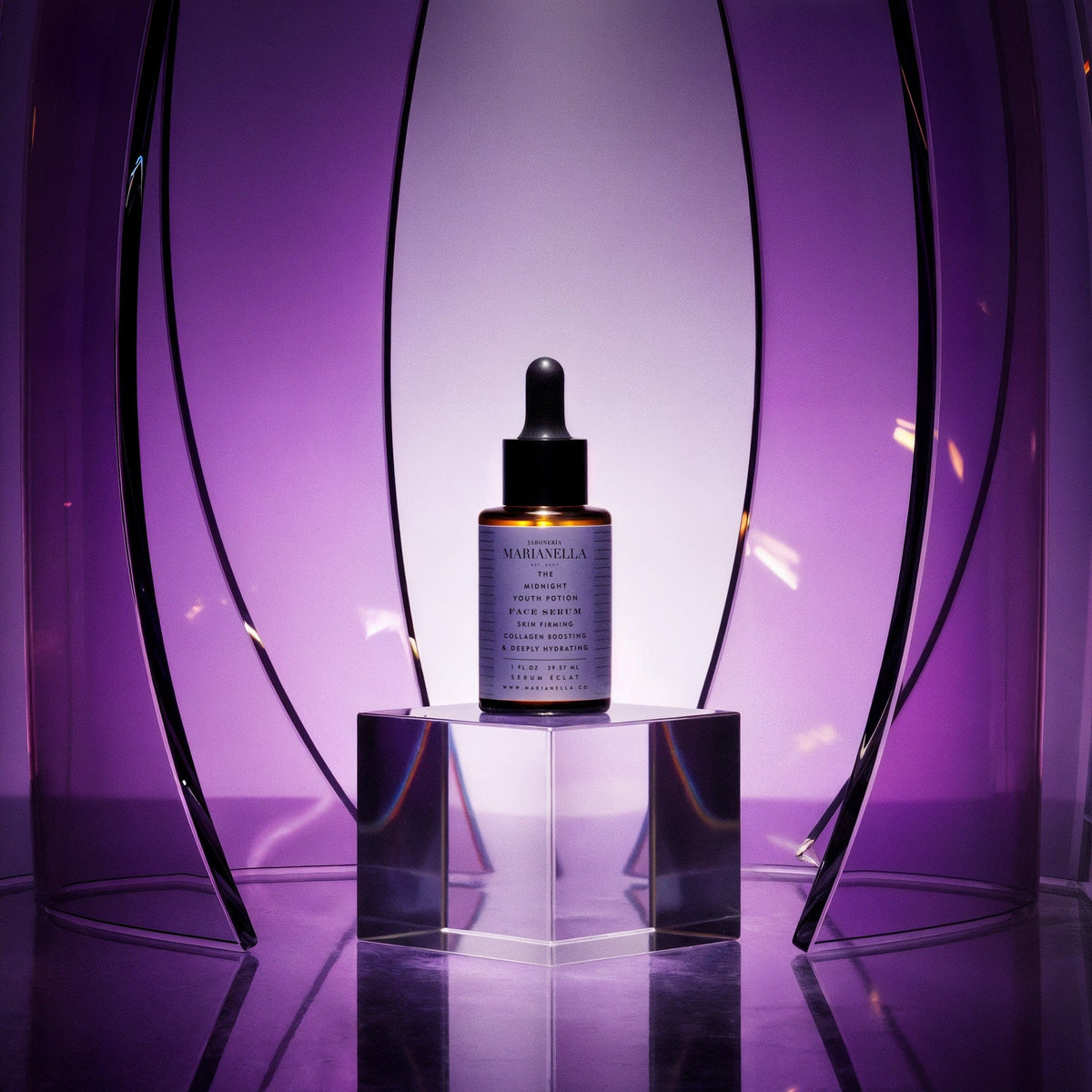
The Midnight Youth Potion, $72
For the last step of the night, after everything else. Camellia's absorption profile is the entire reason a night oil can go on and still let someone read a chapter before sleep without a film across the forehead. The Midnight Youth Potion is $72.
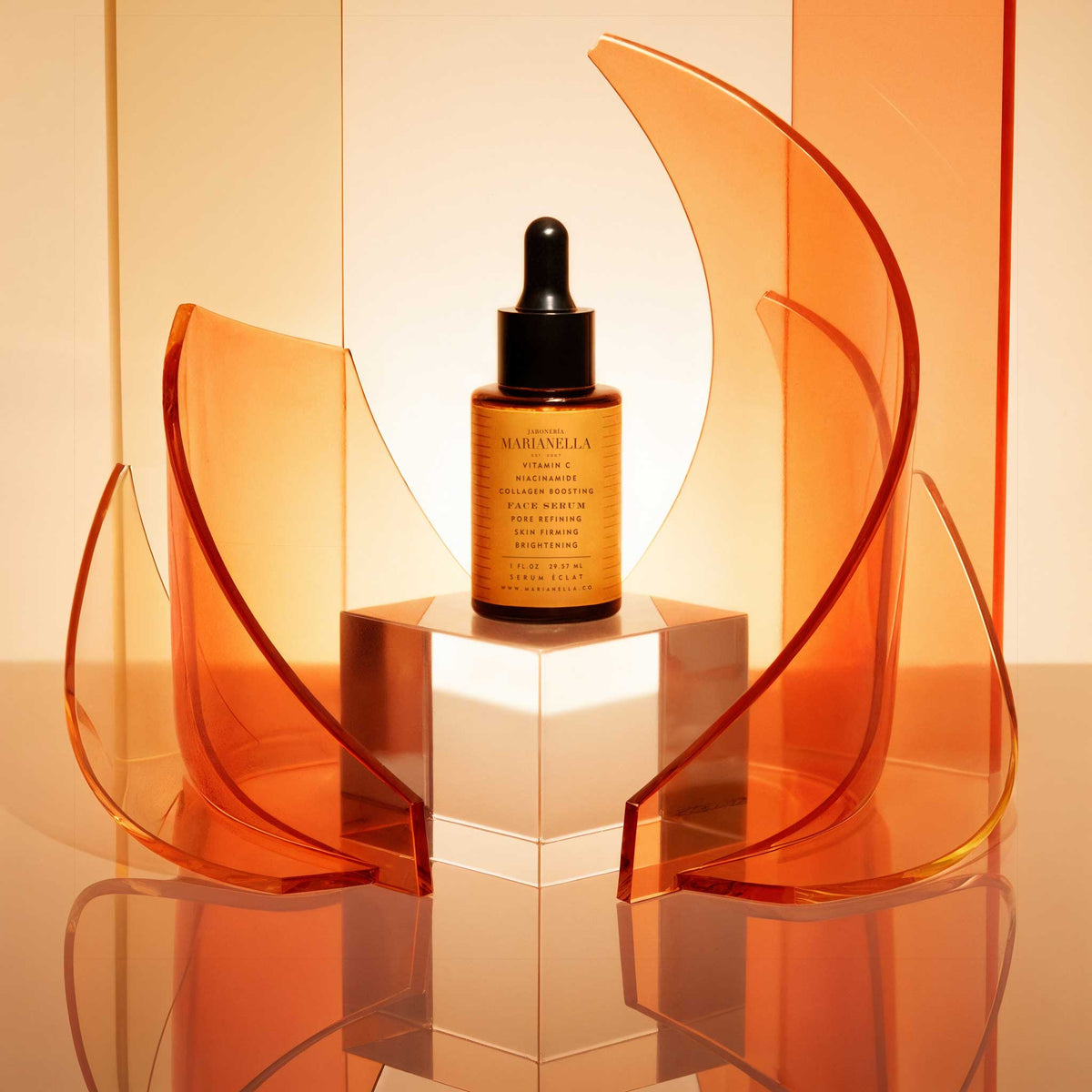
The Royal Kalahari Face Serum, $72
The daily serum, for the face that meets weather, screens, and recycled office air. Given that fatty acids in camellia oil have been credited with reducing transdermal water loss and raising skin hydration, a morning application is the version of this ingredient that works hardest. The Royal Kalahari Face Serum is $72.
The Royal Kalahari Under Eye and Lip Serum Roller Oil, $46
The two places on the face with the thinnest barrier and the least oil of their own, treated with a roller you can use at a red light. The Royal Kalahari Under Eye and Lip Serum Roller Oil is $46, and it is the easiest entry point into the ingredient.
How to use camellia seed oil in a routine
Apply it to damp skin. An oil this high in monounsaturated fat works as an occlusive as much as an emollient, so it performs best sealing water that is already there, which is also the mechanism the atopic dermatitis research attributes to reduced transdermal water loss and increased hydration. Two to four drops, pressed rather than rubbed. Last step in the evening, under sunscreen in the morning. If skin is acting irritated rather than merely dry, the reduction in inflammatory-cell infiltration observed with camellia oil is the reason it is often the oil people tolerate when others sting.
If you want to start with camellia seed oil this year, the Royal Kalahari Under Eye and Lip Serum Roller Oil at $46 is the smallest commitment in the line, and the Midnight Youth Potion at $72 is the one people come back for.
FAQ
Is camellia seed oil the same as tea tree oil?
No. They come from unrelated plants and behave nothing alike. Camellia seed oil is a fixed, cold-pressed seed oil, highly penetrating and nearly odorless under the INCI name Camellia Oleifera Seed Oil. Tea tree oil is a volatile essential oil from an Australian shrub, used in tiny percentages. Camellia can be applied neat; tea tree generally cannot.
Will camellia seed oil clog pores?
Camellia oil hydrates, protects, and improves barrier function, and it is considered non-comedogenic, which can make it suitable for acne-prone skin. Used on its own it is associated with little to no notable side effects. Individual skin still varies, so patch test along the jaw for three nights before committing it to your full face.
What makes camellia seed oil different from olive oil?
Chemically they are close relatives, which is why camellia's olive-like fatty acid profile earned it the name "oriental olive oil". The difference is degree and feel. Camellia seed oils run 76.19% to 81.99% oleic acid, often higher than olive, and roughly 85% of camellia's fatty acids are monounsaturated oleic acid, giving a lighter finish on skin.
Can camellia seed oil be used around the eyes and on lips?
Yes, and that is exactly what the Royal Kalahari Under Eye and Lip Serum Roller Oil at $46 is built for. Both areas have thin skin and little sebum of their own. Since camellia oil has been shown to upregulate filaggrin and aid skin-barrier repair in laboratory models, it is a sensible choice for the face's most fragile zones.
How much camellia seed oil should a product contain to matter?
There is no published threshold. What tells you more is placement on the ingredient list and how the oil was sourced, because composition genuinely varies: studies of different Camellia oleifera cultivars report oleic acid anywhere from 67.7% to 76.7%. Small-batch production, as with every Marianella formula made in Brooklyn, allows that variation to be controlled by hand.

Hinterlasse einen Kommentar
Diese Website ist durch hCaptcha geschützt und es gelten die allgemeinen Geschäftsbedingungen und Datenschutzbestimmungen von hCaptcha.