

What Is Avocado Oil in Skincare
Avocado oil for skin is a cold-pressed lipid extracted from the flesh of the avocado fruit, known botanically as Persea americana. It ranks among the richest plant oils used in modern formulation, prized for a fatty acid profile that closely mirrors the skin's own lipid matrix. Pressed from the flesh of the Persea gratissima fruit, avocado oil sits closer to the "food for your skin" end of the plant-oil spectrum than most, with an unusually high oleic acid content that gives it a skin-feel and lipid profile that genuinely resembles the sebum of dry skin. That resemblance is the reason avocado oil skincare benefits show up so consistently across dermatology literature in 2026.
At Marianella, we have worked with rich botanical oils for 18 years of formulation expertise, since founding the brand in Brooklyn in 2007. Our approach draws on three generations of Venezuelan botanical beauty knowledge, where fruit and seed oils were pressed and used long before "clean beauty" became a marketing term.
Avocado Oil for Skin: The Science Behind the Benefits

|
$46 |

|
$160 |

|
$72 |
Fatty Acid Composition and Barrier Support
The case for avocado oil rests largely on its lipid profile. On average, avocado oil contains about 62% lipids, including monounsaturated and polyunsaturated fatty acids. Within that lipid fraction, oleic acid dominates. Oleic acid is the main fatty acid in the oil, constituting between 50 and 65% of total fatty acids. Some analyses put the figure even higher, with the oil containing approximately 70 percent monounsaturated fatty acids, primarily oleic acid (omega-9), which plays a crucial role in maintaining skin barrier integrity and facilitating the absorption of other nutrients.
This matters because oleic acid behaves differently in the skin than lighter, more astringent oils. Its high concentration of oleic acid, an omega-9 monounsaturated fat, makes it particularly effective at softening and conditioning even the driest complexions, and it helps restore the skin's lipid barrier. A well-maintained barrier keeps water inside the skin instead of letting it escape through the surface, a process dermatologists call transepidermal water loss. This makes avocado oil particularly beneficial for dry, flaky, or dehydrated skin types, as it helps to reduce transepidermal water loss (TEWL).
Beyond oleic acid, the oil carries a supporting cast of compounds. Linoleic acid (omega-6) is linked with ceramide production, supporting barrier function, while palmitic acid contributes to a protective skin feel. Vitamin E adds an antioxidant layer to the formula. Vitamin E, present in avocado oil at concentrations of 5 to 10 milligrams per 100 grams, functions as a powerful antioxidant that protects skin cells from oxidative stress caused by environmental pollutants, UV radiation, and normal metabolic processes. Sterol content is measurable and meaningful too. The study of the unsaponifiable fraction revealed that avocado oil contains 3259.9 to 5378.8 mg/kg sterols and 113.13 to 332.17 mg/kg tocopherols.
What Clinical Studies Show About Wrinkles and Elasticity
Beyond hydration, there is emerging clinical evidence for firmness and fine line reduction. In one trial, volunteers aged 30 to 60 years applied a cream based on avocado oil to their face daily for 12 weeks, and researchers observed a decrease in the depth of crow's feet and perioral wrinkles, as well as a global increase in skin elasticity and firmness. Researchers have proposed a mechanism for this effect. It is hypothesized that the oil works by inhibiting the activity of lysyl oxidase, an enzyme that breaks down collagen, and collagen is the fibrous protein in the dermis that contributes to the structure and firmness of the skin. The oil's phytosterol content appears to play a role here as well, since avocado vegetable oil contains sitosterols and campesterols, molecules that belong to the phytosterol family.
Separate research has looked at collagen synthesis directly. A scientific review of plant oils found that research using animal subjects has shown topical application of avocado oil increases collagen synthesis, and it reduced the amount of inflammatory cells during the wound-healing process. One formulation review is more measured about how strong this evidence is, noting that the case for avocado oil is sturdiest on emolliency and barrier support, and noticeably more tentative on the headline claims around collagen and wound healing. This is a fair distinction. Barrier repair is well documented. Collagen claims deserve more research before they are treated as settled.
Penetration and Compatibility With Skin Lipids
One reason avocado oil for skin performs differently than many carrier oils is molecular similarity. Unlike many plant oils, avocado oil penetrates deeply into the skin, and its fatty acid profile closely resembles natural skin lipids, which explains its exceptional absorption and tolerance. Independent penetration research using human skin tissue confirms that fatty acids from the oil do move into the tissue. A study analyzing fatty acid content in soybean, olive, avocado, sea-buckthorn pulp, raspberry seed and coconut oils used time of flight secondary ion mass spectrometry to determine fatty acid distribution in human skin ex vivo, and results demonstrated skin penetration of fatty acids from all oils tested.
Best Avocado Oil Products 2026: Who Should Use It and How
Ideal Skin Types
Avocado oil skincare benefits are most pronounced for dry, mature, and barrier-compromised skin. Dermatologists note that avocado oil's high oleic acid content makes it especially valuable for repairing compromised skin barriers in conditions like eczema and psoriasis, and it is recommended frequently for patients with chronic dry skin who have not responded adequately to conventional moisturizers. Eczema-prone skin in particular tends to respond well, since this chronic condition results from a compromised skin barrier that allows excessive moisture loss and irritant penetration, and avocado oil addresses both issues by reinforcing the lipid barrier and reducing inflammation.
A Note on Oily and Acne-Prone Skin
Richness is not universal. Avocado oil's comedogenic rating sits around 3 out of 5 thanks to its high oleic acid content, putting it at moderate pore-clogging potential. Formulators account for this through concentration and pairing with lighter textures. Professional skincare guidance echoes the same caution, since a high percentage of oleic acid, even with a relatively low comedogenicity potential and a "0" irritancy rating, may not be appropriate for oily, clog-prone skin when used in strong concentration, though in low concentrations it poses little potential comedogenic issue. This is precisely why formulation matters more than the raw ingredient alone. A well-balanced cream or targeted oil roller delivers the benefit without overwhelming the skin.How Marianella Formulates With Avocado Oil
Handcrafted in small batches in Brooklyn, our formulas are built around the same principle dermatology research supports: rich lipids belong in targeted, well-balanced doses, not as a standalone slather.
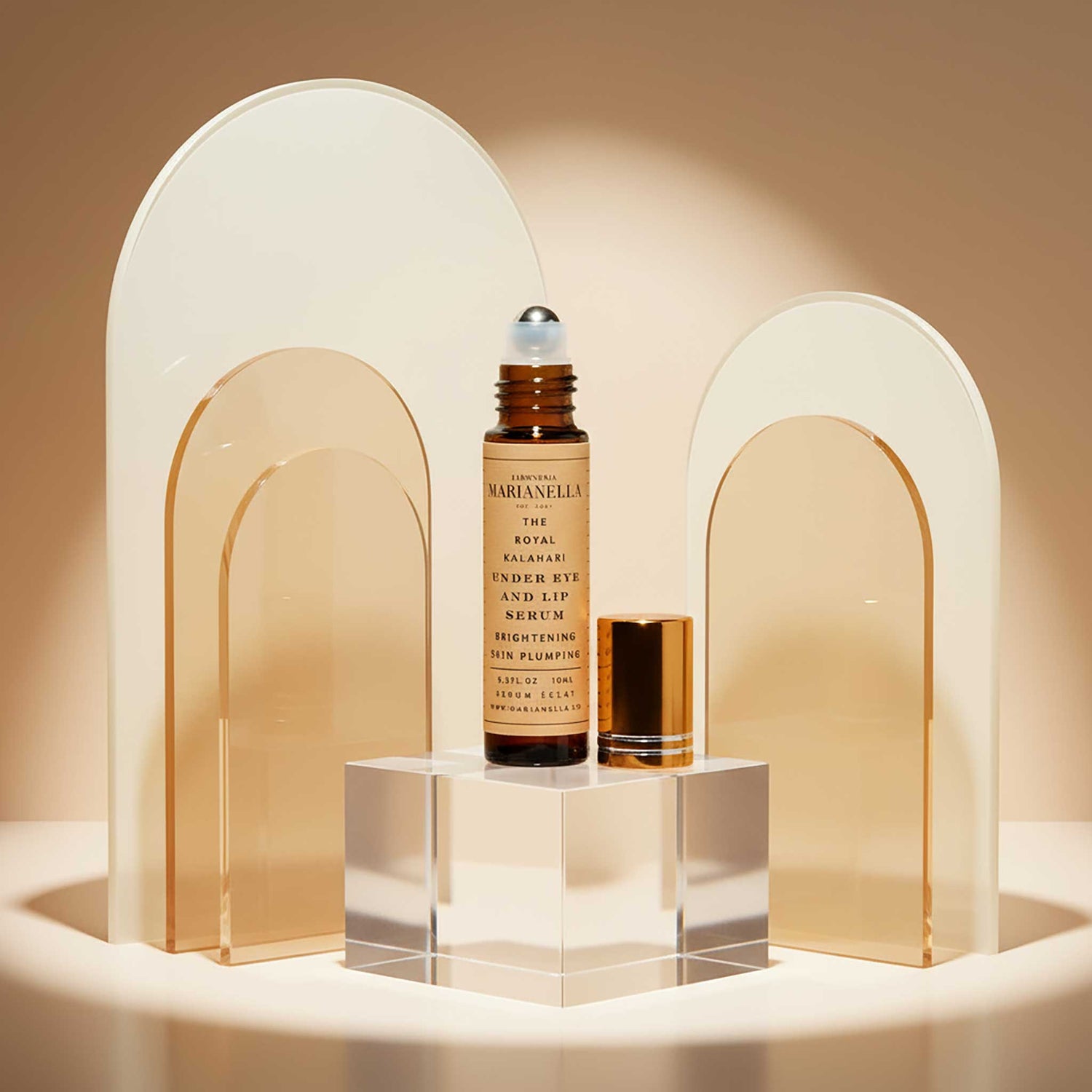
The Royal Kalahari Under Eye and Lip Serum Roller Oil
The under-eye and lip area loses lipid density faster than the rest of the face. This roller oil concentrates avocado oil's emollient, barrier-supporting profile into a precise applicator built for the thinnest skin on the body. The Royal Kalahari Under Eye and Lip Serum Roller Oil, $46.
Wrinkle Reducing Ultra Peptide Intensive Night Cream
Overnight is when skin repair work happens. This night cream pairs peptides with rich emollients including avocado oil, formulated for the elasticity and firmness support that clinical research on this oil has documented. Wrinkle Reducing Ultra Peptide Intensive Night Cream, $160.
The Midnight Youth Potion
A nighttime treatment oil built for barrier recovery, drawing on avocado oil's fatty acid profile to support hydration while skin is in repair mode. The Midnight Youth Potion, $72.
Frequently Asked Questions
Is avocado oil good for anti-aging in 2026 formulations?
Current evidence supports moderate anti-aging benefit, particularly for elasticity and fine line depth after weeks of consistent use, though claims around collagen synthesis remain stronger in animal and lab studies than in large human trials.
Can avocado oil be used daily?
Yes, for dry and normal skin types. Those with oily or acne-prone skin should look for it in lower concentrations within a balanced formula rather than as a standalone facial oil.
What does avocado oil pair well with?
The oleic acid in avocado oil works well in combination with ingredients like retinoids to help them absorb more quickly and deeper into the skin, which is one reason it appears in recovery-focused formulas meant to support skin after active treatments.
The Takeaway on Avocado Oil for Skin
Avocado oil earns its place in luxury skincare through a fatty acid profile that mirrors the skin's own chemistry, documented barrier repair, and early but promising elasticity data. It is not a miracle ingredient. It is a well-studied lipid that performs a specific job well: reinforcing the barrier that keeps skin hydrated, calm, and resilient.
Marianella has spent 18 years translating botanical ingredients like this into formulas handcrafted in Brooklyn, now available at Bloomingdale's BEAUTYSPACE and recognized by Vogue, People Magazine, Oprah, and Forbes. Explore the full lineup of 82 formulas across face, body, and home to find where avocado oil fits into your own routine.

Hinterlasse einen Kommentar
Diese Website ist durch hCaptcha geschützt und es gelten die allgemeinen Geschäftsbedingungen und Datenschutzbestimmungen von hCaptcha.