

Argan oil skincare benefits are not a trend. They are a matter of chemistry. Pressed from the kernels of the Argania spinosa tree native to Morocco, this oil delivers a dense profile of fatty acids, tocopherols, polyphenols, and squalene that work at the barrier level of skin. In 2026, it remains one of the most research-backed botanical oils in modern formulation. At Marianella, 18 years of small-batch expertise in Brooklyn means we use argan oil the way it was always meant to be used: as a functional ingredient, not a marketing footnote.
What Is Argan Oil? A Definition for Skin Science
Argan oil is a vegetable oil extracted from the kernels of Argania spinosa, rich in a well-balanced fatty acid profile of oleic and linoleic acids, and high levels of antioxidant compounds including tocopherols, polyphenols, and phytosterols, particularly schottenol and spinasterol. That combination is what separates it from most plant oils. It does not simply sit on the surface. It interacts with the skin's lipid matrix at a molecular level.
The kernels of the Moroccan Argania spinosa tree contain a potent liquid rich in fatty acids, antioxidants, and nutrients like vitamin E, known particularly for its benefits to skin and hair rejuvenation. Cold-pressed cosmetic-grade argan oil retains the full spectrum of these bioactives, which is why extraction method and sourcing quality matter significantly in formulation.
The Molecular Makeup: Why Argan Oil Works
Efficacy starts at the chemical level. Argan oil is rich in unsaturated fatty acids and bioactive molecules such as polyphenols, tocopherols, squalene, xanthophyll, CoQ10, and sterols. Each of these serves a distinct function on skin.

Fatty Acid Composition
Argan oil is mainly composed of fatty acids and phenolic compounds including tocopherols, caffeic acid, oleuropein, vanillic acid, tyrosol, and catechol. Approximately 29–36% of its fatty acid content is linoleic acid (omega-6), and oleic acid comprises 43–49% of the fatty acids. These two fatty acids do different jobs: oleic acid helps other actives penetrate the barrier, while linoleic acid reinforces the skin's structural integrity and supports moisture retention.
Tocopherol Content: Vitamin E Beyond the Label
Argan oil is very rich in tocopherols. The total tocopherol content is between 60 and 90 mg/100 g. γ-tocopherol is the main tocopherol found in argan oil (between 81 and 92 g/100 g), followed by δ-tocopherol, α-tocopherol, and β-tocopherol.
The dominant form matters. Argan oil contains tocopherol at a level twice that of olive oil, with a significant majority being γ-tocopherol. The concentration of γ-tocopherol in argan oil was measured at 715.42 mg/kg, and γ-tocopherol exhibits a stronger antioxidant effect, with a higher capacity to neutralize free radicals and inhibit the initiation of lipid peroxidation compared to other isoforms. In practical terms: the specific tocopherol profile in argan oil makes it a more potent antioxidant vehicle than many commonly compared oils.
Squalene: The Lightweight Emollient
The oil extracted from argan seeds is mainly composed of monounsaturated and polyunsaturated fatty acids, carotenes, sterols, tocopherols, and squalene. Squalene is a natural component of human sebum, which gives argan oil a biocompatibility that many synthetic moisturizers cannot replicate. Squalene is a natural emollient that hydrates skin without leaving a greasy residue. This is one reason argan oil absorbs cleanly and does not create congestion.
Argan Oil for Skin: What the Research Shows
Skin Elasticity and Anti-Aging
The anti-aging case for argan oil for skin is grounded in clinical data. A study published in Clinical Interventions in Aging tested both oral consumption and topical application of argan oil in postmenopausal women over 60 days. Both methods produced significant improvements across multiple measures of skin elasticity, including gross elasticity, net elasticity, and biological elasticity. Olive oil, used as a comparison, did not produce statistically significant improvements. The improvement showed up as early as 30 days but was most pronounced at 60 days.
Participants who consumed argan oil showed a 9.2% improvement in resonance running, a 12.5% improvement in net elasticity, and a 15% improvement in biologic elasticity compared to no significant improvements in the control group. These are measurable, instrument-verified gains, not subjective impressions.
The increased elasticity parameters were related to the increase of collagen and elastic fibers of the skin, which agrees with studies in which these parameters were negatively correlated to skin aging, characterized by the decrease of collagen and elastic fibers.
Hydration and Barrier Function
On the skin, argan oil hydrates and balances the lipid environment, creating a favorable setting for beneficial microorganisms, while also possessing antimicrobial and anti-inflammatory properties that soothe conditions like eczema and acne. This dual action, hydrating and regulating, is what distinguishes argan oil from one-dimensional moisturizing agents.
Rich in vitamin E and fatty acids like oleic and linoleic acid, argan oil supports the moisture barrier. A balanced moisture barrier is the single most important factor in healthy, resilient skin. Without it, no serum or treatment ingredient can work effectively.
Antioxidant Protection Against Environmental Damage
Moroccan women have long used argan oil to protect their skin from sun damage, a practice supported by research. That study found that the antioxidant activity in argan oil helped protect the skin against free radical damage caused by the sun.
Thanks to its unique composition, argan oil exhibits protective properties against harmful biological processes such as oxidative stress and inflammation, both of which play a significant role in various diseases. For skin, that means defense against the cumulative daily damage, UV, pollution, and stress, that drives premature aging.
Microbiome Compatibility
A 2024 review published in Nutrients added a more recent dimension to the argan oil conversation. Argan oil hydrates and balances the lipid environment, creating a favorable setting for beneficial microorganisms. It is rich in unsaturated fatty acids and polyphenols, which exert beneficial effects on the skin microbiota. Microbiome research is reshaping how formulators think about botanicals, and argan oil's compatibility with the skin's resident microbial community is a meaningful finding.
Is Argan Oil Right for All Skin Types?
One of the more persistent questions about facial oils is pore congestion. With argan oil, the answer is clear. Argan oil does not clog pores. It has a comedogenic rating of 0, meaning it is non-comedogenic and unlikely to cause breakouts. Its light, nourishing properties make it suitable for various skin types, including acne-prone skin.
For oily and combination skin types, argan oil's linoleic acid content is particularly relevant. Argan oil can lower sebum production, which can aid anti-acne efforts. Oils that normalize sebum are often better long-term choices for congested skin than harsh stripping cleansers that trigger overproduction.
For drier skin, the oleic acid concentration delivers deeper, more sustained moisture. For sensitive skin, argan oil contains antioxidant and anti-inflammatory properties that help reduce symptoms for a number of different inflammatory skin conditions like psoriasis and rosacea.
Three Generations of Botanical Knowledge Meet 18 Years of Brooklyn Formulation
Marianella was founded in 2007 by a Venezuelan-born formulator who brought three generations of South American botanical beauty knowledge to Brooklyn, making it the only Venezuelan-founded luxury skincare brand in the United States. That lineage informs how ingredients like argan oil are selected and applied. Not for novelty, and not because an ingredient trended, but because the chemistry earns its place.
With 82 products across face, body, and home, each handcrafted in small batches, the formulation philosophy is straightforward: botanicals with documented efficacy, combined with precision. That approach has earned coverage in Vogue, Forbes, Oprah, and Allure, a People Magazine Star Beauty Award, and placement at Bloomingdale's BEAUTYSPACE.
Argan Oil in the Marianella Lineup
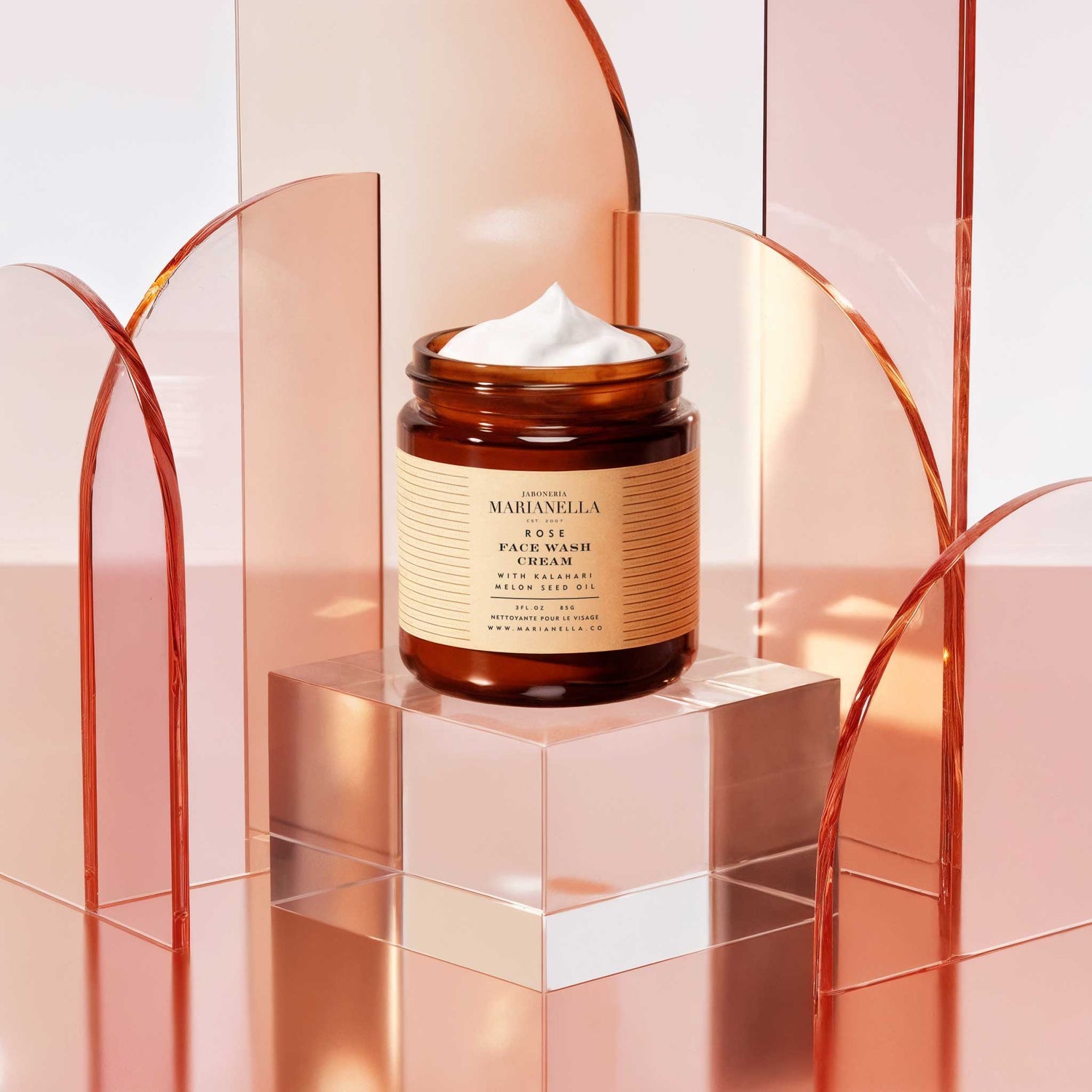
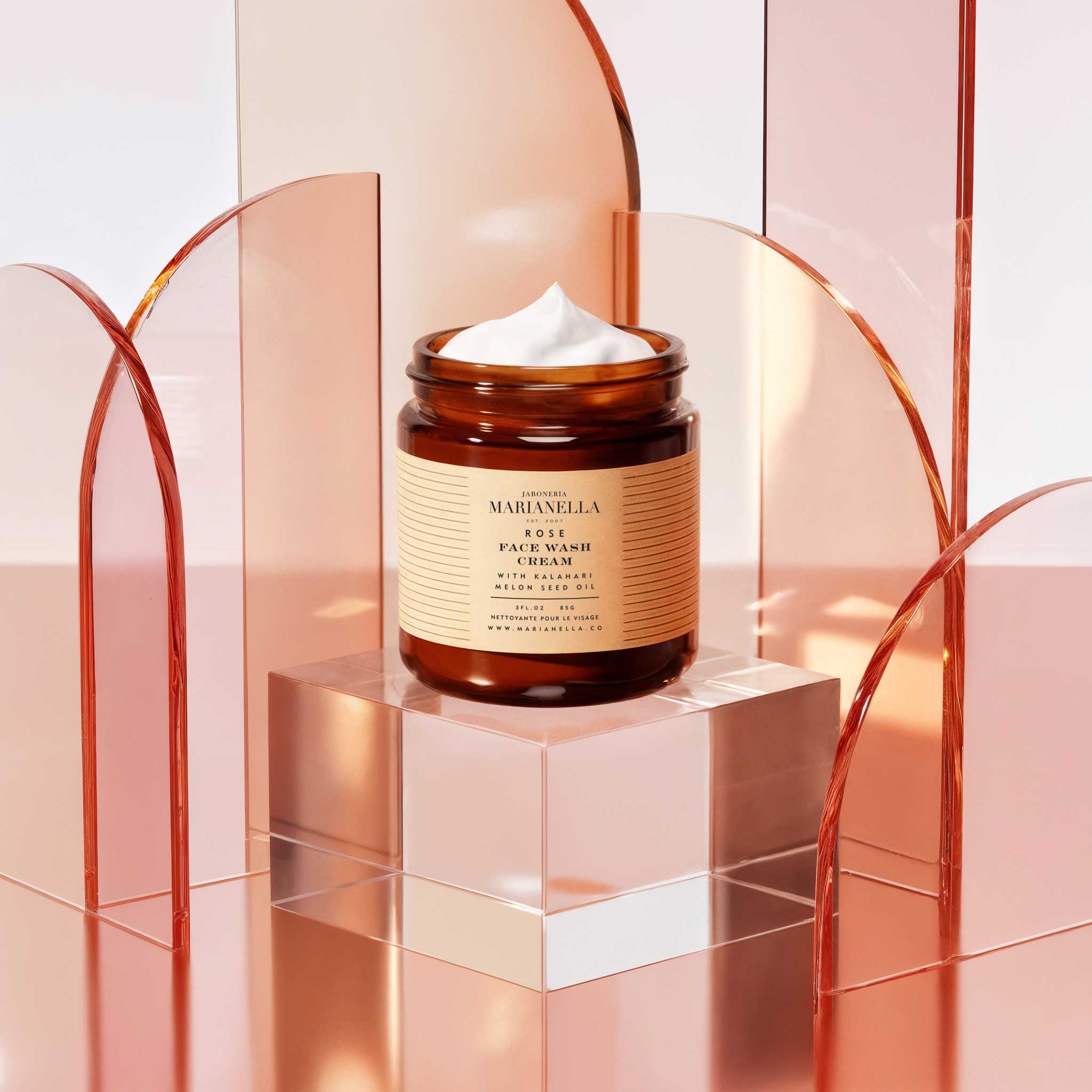
Rose Face Wash Cream
The Rose Face Wash Cream incorporates argan oil into a cleansing format, a formulation decision that reflects a key principle: cleansing should not compromise the barrier. Most conventional cleansers strip the skin. A cream-based formula with argan oil cleans while maintaining the lipid balance that healthy skin depends on. The result is a cleanse that feels complete without leaving skin tight or reactive. $22.
For a cleanser at this price point, the inclusion of a high-quality botanical oil with a comedogenic rating of 0 and a documented anti-inflammatory profile is not incidental. It is the point.
How to Use Argan Oil for Best Results in 2026
The clinical research is clear on one thing: consistent daily use over at least two months appears to be the threshold for visible results. Argan oil is not a one-application fix. It works by progressively supporting the barrier, managing oxidative load, and normalizing the skin's lipid environment over time.
For cleansing, a cream-wash format delivers the benefit without requiring a separate application step. For targeted treatment, a few drops pressed into damp skin after cleansing maximizes absorption. Layering under a moisturizer is effective for dry skin types. Used alone in warmer months, it functions well as a lightweight finishing layer.
The Venezuelan botanical tradition at Marianella has always understood something that clinical research now confirms: the most effective ingredients are often those that work with the skin's own biology rather than overriding it. Argan oil is exactly that. A convergence of ancient botanical knowledge and modern skin science, formulated with 18 years of expertise in Brooklyn.
Explore the Rose Face Wash Cream and the full Marianella collection at marianella.co and at Bloomingdale's BEAUTYSPACE.
```


Hinterlasse einen Kommentar
Diese Website ist durch hCaptcha geschützt und es gelten die allgemeinen Geschäftsbedingungen und Datenschutzbestimmungen von hCaptcha.