


Where on your skin should lemon go? That depends on whether it washes off. Lemon extract's main benefit comes from the flavonoids in the peel, which are antioxidants and work well in a face serum. The same peel, cold-pressed into an oil, also contains compounds that react with sunlight. That is why lemon extract in serums, soaps, lotions and body oils follows different rules in each. A soap rinses away before the sun can do anything. A lotion or body oil stays on your skin all afternoon, so the kind of lemon and how much of it matter far more.
Zest a lemon in the morning and you can still smell it on your fingers at lunch. That scent is the peel's oil. It's the most loved part of the fruit, and it's also the part that needs the most care on skin.
What lemon extract does for skin
Lemon peel is mostly made up of polyphenols. In a 2024 analysis of lemon peel extract, the most abundant compounds in the lemon peels are eriocitrin (159.43 mg/L) and hesperidin (135.21 mg/L), both flavonoids. A 2024 review of lemon in cosmetics names antioxidant, anti-inflammatory, antimicrobial, skin-brightening, preservative uses among its main applications.
How strong is lemon extract as an antioxidant?
It's strong in one test and weaker in another. In a study of lemon peel extracts used on skin, the DPPH scavenging activity of the acetone extract was not significantly different from those of vitamin C and rutin. In the same study, though, the reducing ability of both plant extracts was significantly lower than that of vitamin C and rutin. So lemon extract works best alongside vitamin C, not instead of it. That's the case for putting both in one bottle.
Lemon extract in serums, soaps, lotions and body oils
Serums: where lemon extract benefits the face most
A serum is a leave-on product for the face, and it's where the peel's flavonoids are most useful. Here lemon extract usually works alongside other active ingredients, not as the lead. The safest form of lemon in a serum is a peel extract, or a lemon oil with the sun-reactive compounds removed. Reading the label tells you which one you have.

Soaps: the easiest place for lemon
Soap rinses off, so the sun question mostly goes away. For washed-off products, phototoxicity is generally not a concern for products that are washed off immediately (like soaps or shampoos). The international fragrance standard for citrus oils makes the same distinction. Its limit applies only to skin exposed to UV light, excluding rinse-off products.
Lotions and body oils: where the kind of lemon matters
Body lotion and body oil sit on your arms, shoulders and neck for hours, which are often the places the sun reaches first. Almost all phototoxic chemicals found in plants belong to a class known as furanocoumarins, and cold-pressed lemon peel oil contains them, including bergapten. How the oil is made makes a big difference. FCs are relatively heavy, non-volatile molecules, meaning that they do not easily evaporate, and so they will not pass over into the essential oil during distillation. Because distilled citrus oils contain virtually no FCs, they are not phototoxic.
For skin exposed to sun, the fragrance industry's standard says the total level of Bergapten in the consumer products should not exceed 0.0015% (15 ppm). In practice, the commonly cited safe dilution for cold-pressed lemon oil in a leave-on product is 2% or about 12 drops per ounce of carrier. A lemon body oil made with distilled or furocoumarin-free lemon oil can be worn into a sunny afternoon. A body oil made with cold-pressed lemon oil above that limit can't.
Lemon extract and air
Air causes the second problem. R-Limonene autoxidizes on air exposure, and the oxidation products can cause contact allergy. Limonene makes up most of lemon oil. In one multicentre study, 5.2% (range 2.3–12.1%) of 2900 patients showed a positive patch test reaction to oxidized R-limonene. These patients were already being seen for dermatitis, and a ten-year Danish series found a lower rate. There, the prevalence of positive patch test reactions was 1.6% for Lim-OOH. Either way, keep any lemon-scented bottle closed between uses and away from heat. Someone with a known fragrance allergy should read the label first.
Best lemon extract products 2026: what to look for
When choosing the best lemon extract products in 2026, look at the format before the scent.
- For the face: a serum that pairs lemon peel extract with vitamin C, so each covers what the other lacks.
- For the shower: a lemon soap or body wash can carry cold-pressed lemon oil, since it rinses off.
- For lotions and body oils: look for peel extract, distilled lemon oil, or lemon oil labelled furocoumarin-free or bergapten-free.
- For any format: a closed bottle, kept cool.
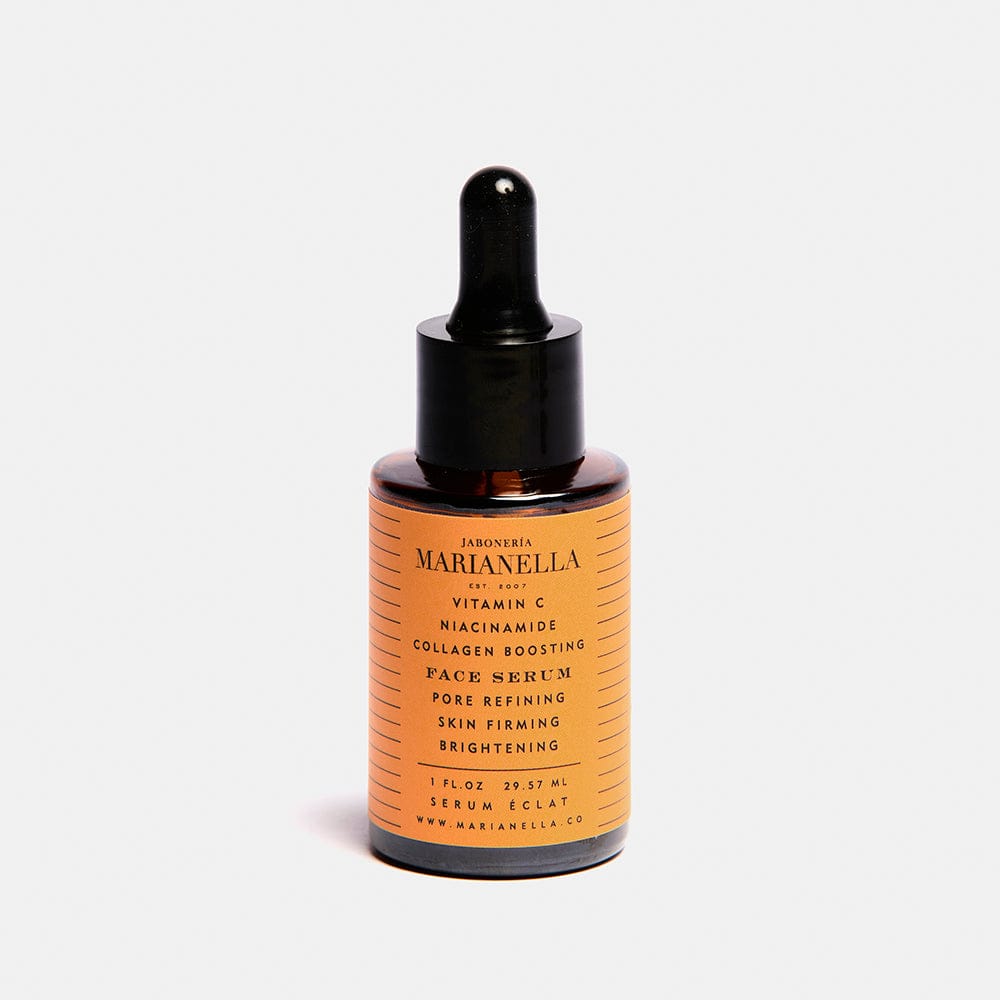
On our own shelf, lemon extract goes into the face, where it does the most good. Our Vitamin C Collagen Boosting Face Serum with Niacinamide combines lemon extract with vitamin C and niacinamide in one serum. [Form of lemon extract in the serum, and where it goes in the routine, from the serum's Product Bible.] We make it in Brooklyn, along with the rest of our face, body and home collections.
The Vitamin C Collagen Boosting Face Serum with Niacinamide is $72 in our shop.
FAQ
Does lemon extract make skin sensitive to the sun?
Lemon peel extract and distilled lemon oil contain almost none of the compounds that react with sunlight. Cold-pressed lemon oil does contain them. In a leave-on product it's kept to low levels, around 2% under the common guideline, and in soaps and other rinse-off products it's generally not a concern.
Is lemon extract the same as lemon essential oil?
No. Lemon peel extract is valued for its flavonoids, such as eriocitrin and hesperidin, which are antioxidants. Lemon essential oil is mostly limonene, and if it's cold-pressed it also contains bergapten. The INCI name on the label tells you which one a product uses.
Can lemon extract be used with vitamin C?
Yes, and they work well together. Lemon peel extract has been shown to match vitamin C in one antioxidant test and fall short in another, so a serum with both covers more ground than either one alone. Our Vitamin C Collagen Boosting Face Serum with Niacinamide is made this way.
Are lemon soaps safe for daily use?
For most people, yes. Soap rinses off before sunlight becomes an issue. Anyone with a known allergy to limonene or fragrance should check the ingredient list, because oxidized limonene is a recognized contact allergen.
Which Marianella product contains lemon extract?
The Vitamin C Collagen Boosting Face Serum with Niacinamide, $72, contains lemon extract with vitamin C and niacinamide.


















Hinterlasse einen Kommentar
Diese Website ist durch hCaptcha geschützt und es gelten die allgemeinen Geschäftsbedingungen und Datenschutzbestimmungen von hCaptcha.